Get Our RSS Feed!
Front Porch Blog

Matt Wasson


AV's Director of Programs


WATCH: Appalachian Kids Give Science Lesson to President Obama


Thursday, January 3rd, 2013 | Posted by Matt Wasson


Children in Appalachian coal mining communities are 42% more likely to be born with birth defects and have a life expectancy that is almost 5 years lower than the national average. As this short video shows, they understand why:

Dozens of scientific studies have linked mountaintop removal coal mining to high rates of cancer and other diseases in nearby communities. But as these children explain, you don’t need to be a scientist to understand the devastating impact that mountaintop removal has on the health and quality of life of people living nearby.

Thanks to thousands of people who have spoken up for Appalachian mountains and communities time and again, President Obama’s agencies have taken major steps to reduce the destruction caused by mountaintop removal coal mining over the past four years.

As the president is sworn in to a second term later this month, we have an opportunity to finish the job and stop mountaintop removal once and for all. But we need to ensure that President Obama makes this a priority in his second term.

That’s where you come in. Please join these kids in sending a clear message to the White House: No more excuses, Mr. President. End mountaintop removal. Now.

Help these children spread the word about what’s happening in their communities by sharing this video with your friends, family and colleagues.

Electoral Math for “All You Climate People”


Tuesday, November 20th, 2012 | Posted by Matt Wasson


During a campaign season in which climate change featured most prominently as a laugh line at the Republican National Convention, the low point was when CNN’s Candy Crowley addressed “all you climate people” in her explanation of why climate didn’t come up during the presidential debates. Who knew that human disruption of the global climate had become such a narrow, provincial concern?

But there’s important information in the fact that a senior reporter for a major network could dismiss climate change as essentially a special interest issue. It’s evidence, if more were needed, that “all us climate people” got our butts kicked in the battle for the narrative in the 2012 election.

And like the Republican Party, which is now undergoing the usual soul searching that follows a big electoral defeat, those of us who believe that inaction on climate is the greatest threat facing our civilization (never mind the economy) have some serious soul searching to do about our own defeat, which occurred long before any votes were counted.

Crowley’s explanation was consistent with the conventional wisdom on why the president didn’t make climate an issue. Because it was an “Economy election” and everyone in the DC press must accept that government action on climate change could do serious harm to the economy (because “it’s become part of the culture,” even if it’s not true), any discussion of climate policy by the president would have been off-message and worked against his chances for re-election.

The unconventional wisdom, popular among “climate people,” is that the Obama campaign failed to recognize the high level of popular support for action on climate change and missed a golden opportunity to seize a winning wedge issue when they chose the more politically expedient route of ignoring it.

There’s probably some truth to both of these explanations, but here’s a third one that is particularly useful in the context of a presidential election: the campaigns avoided talking about climate policy because they believed that raising the issue would be harmful in a few swingy areas of key swing states that would likely decide the election.

Look, it’s tempting to point to all the national polls showing popular support for climate policy and say, “climate is a winning campaign issue.” But a political strategist would find nothing useful in those polls because campaigns are not won by appealing to the sentiments of the average American. Similarly, when a presidential candidate is speaking to a national audience, it’s easy to believe they are speaking to us — all of us. But they’re not. By and large, the candidates’ speeches are written to appeal to a handful of undecided voters in a few swing states, with just enough partisan red meat thrown in to motivate the party base to volunteer for the campaign and turn out to vote.

Americans understand that those swingy areas are the “tail that wags the dog” of our national elections but don’t necessarily think about the logical conclusion of that fact; the concerns and attitudes of swing voters in swing states are the “tail that wags the dog” of campaign messages, media coverage, and thus public understanding of what issues are important in the campaign.

The problem is fossil fuel interests have figured out how to wag that dog. They know they can’t win public opinion nationally, but by focusing resources in key areas of swing states such as Virginia, Ohio and Pennsylvania, they can frame the local discussion of climate policy and environmental regulations to their advantage (i.e., as a “Job-killing war on coal“) and essentially neutralize those issues at the national level — at least during the election season.

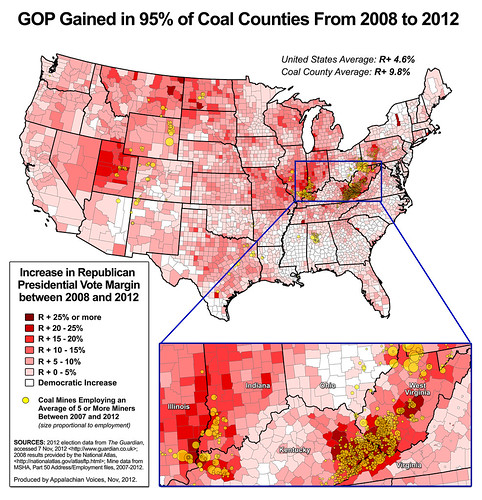
If the Obama campaign’s pre-election polling looked anything like the maps of election results in coal-mining regions of southwestern Virginia and southern Ohio, it’s easy to imagine strategists telling the president, “Don’t exacerbate this ‘war on coal’ thing or it could hurt us in swing states” (see map):

US_Election_Vote_Margins2

Read more
...


Big Coal Wins Latest Battle to Blast Historic Blair Mountain


Tuesday, October 9th, 2012 | Posted by Matt Wasson


Is nothing sacred to coal companies in Appalachia?

March on Blair Mountain

In a jaw-dropping display of contempt and disregard for the communities and landscapes where they mine coal, three coal companies back in 2009 challenged the listing of West Virginia’s Blair Mountain on the National Register of Historic Places. The companies, including mining behemoths Alpha Natural Resources and Arch Coal, opposed the listing of Blair Mountain as a historic site because it could interfere with their plans to conduct mountaintop removal mining operations on the Spruce Fork Ridge battlefield, site of the “largest organized armed uprising in American labor history,” and the most important historic landmark in Central Appalachia.

The 1921 Battle of Blair Mountain was the culmination of a three-year struggle to unionize the coal mines of southern West Virginia and ended only when federal troops intervened on behalf of anti-union coal companies. There are few sites as significant as Blair Mountain that commemorate the brave men and women who laid down their lives for a movement that has brought Americans everything from the weekend to child labor laws to the largest and most prosperous middle class the world has ever seen.

Read more
...


Despite Court Ruling, Obama Administration Can Still Protect Streams from Mountaintop Removal Mining – And Should


Friday, August 3rd, 2012 | Posted by Matt Wasson


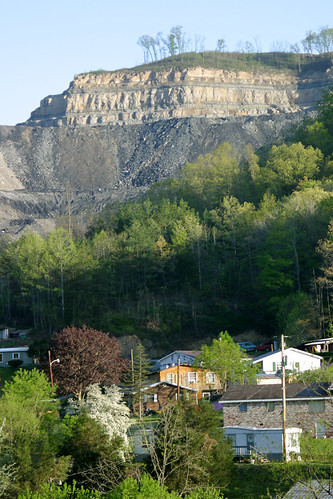
Mountaintop Removal Mine above Homes in Eastern Kentucky
Environmental and community advocates got some jarring news Tuesday when a federal judge rejected EPA’s “guidance” on surface mine permitting in Appalachia — the centerpiece of its 3-year effort to curtail the environmental damage caused by mountaintop removal coal mining.

While it was unwelcome news, it was not as devastating as portrayed in the initial round of news stories, which appeared to be heavily influenced by the coal industry’s false narrative about an “out-of-control” EPA issuing regulations willy-nilly while going out of its way to trample on the Constitution and kill jobs.

In fact, the court objected to the procedural approach EPA took to reduce what top scientists have called the “pervasive and irreversible” impacts of mountaintop removal, but specifically not to the authority — or obligation — of EPA and other federal agencies to protect streams from being polluted or obliterated by mountaintop removal coal mining. Nor did the court challenge the overwhelming evidence by scientists, health professionals, and the findings of EPA’s independent Science Advisory Panel that mountaintop removal mining has disastrous impacts on streams and people.

Even the arcane procedural issues on which the decision was based are far from a settled matter of law — the decision is likely to be appealed by the EPA.

Nevertheless, the headlines left many Appalachian residents terrified by the prospect that regulators would revert to the lame permit rules of the Bush Administration. While there is always a chance that could happen, Appalachians can take some comfort that agencies rubber-stamping piles of permits is not a logical or inevitable outcome of the court’s decision.

The risk, of course, is that the Obama Administration will see this as an opportunity to abandon its efforts to rein in the impacts of mountaintop removal, efforts which have caused a fierce backlash from the coal industry and its allies. In the heat of campaign season, there’s probably some temptation to try to offset the political damage that the rhetoric about “Obama’s war on coal” is doing in remote corners of swing states like Ohio and Virginia, even if it means the president turns his back on his oft-repeated commitment to science-based decision-making by his agencies.

On the bright side, the way the administration perceives that political calculus is something that everyday Americans can do something about. But we’d better speak up now. Seriously, anyone who thinks that America’s oldest and most biologically diverse mountains ought not be obliterated to pad the pockets of coal company executives and shareholders needs to say so. Loudly.

The administration has all the evidence and authority it needs to deny mountaintop removal permits. While EPA appeals the D.C. court decision, and/or figures out a different way to ensure that permits comply with the Clean Water Act, it’s crucial that other agencies like the Army Corps of Engineers and the Office of Surface Mining make darn sure that science is applied in the permitting process. Based on what we know, that should be tantamount to denying any permit that involves disposing of mine waste into streams.

But there is also a lesson here for the EPA — and an opportunity to address the root of the problem. Despite tens of thousands of comments urging EPA to act, the agency has yet to overturn the Bush Administration’s nefarious change to the so-called “fill rule.” This rule defines what sort of material can be used to modify a stream, wetland or other water body for the purpose of building a road, dredging a river, etc. In 2002, the Bush Administration changed the definition of “fill” such that any waste from a surface mining operation is, by definition, fill – meaning it’s not only OK to dump in streams, it’s essentially considered a public benefit. Yes, you heard right – a benefit.

Every mountaintop removal-related permit issued by the Obama Administration has been based on that perverse logic. The lesson for EPA is that it would be futile to try to build a sensible, protective permitting regime on top of this absurd foundation laid by the Bush Administration. The EPA should overturn and replace the Bush-era fill rule.

A final lesson from this court decision is that we cannot rely solely on administrative guidances and rules to protect Appalachian citizens, the oldest mountains on the continent, or the headwaters of the drinking water supply of millions of Americans. Mountaintop removal coal mining is an outrage that should be banned by Congress, or there will always be the risk of a court striking down or a new administration overturning it, no matter how well the science supports it.

In 2002, Representatives Chris Shays (R-CT) and Frank Pallone (D-NJ) introduced the Clean Water Protection Act, which would overturn the Bush fill rule. Since then, people and organizations across Appalachia have supported the bipartisan bill by carrying a simple message to universities, church groups and Rotary Clubs across America: They’re blowing up our mountains and there oughtta be a law! Today, the bill has 130 bipartisan cosponsors in the House of Representatives. Additional legislation has been introduced recently that would put a moratorium on mountaintop mining permits.

The bottom line is that Appalachian citizens need better protection than a non-binding agency guidance. EPA should begin a formal rule-making to undo the violence done to Clean Water Act enforcement by the Bush fill rule. And ultimately, citizens won’t be satisfied until Congress passes the Clean Water Protection Act, the Appalachian Communities Health Emergency Act, or some other law that will not be so easily overturned or manipulated by ever-changing administrations and courts.

It’s not only what the science dictates, it’s what Appalachian citizens deserve.

Snake Handlers, Strippers and the KKK: CNN’s Portrait of “Everyday Life in Appalachia”


Wednesday, May 9th, 2012 | Posted by Matt Wasson


So CNN ran a sensationalized and superficial story built on stereotypes that lacked any news value. Big news, right? Grow up, kid, this is the entertainment business…

That’s an excerpt from the conversation in my head before deciding to write a post about the photo-essay that was posted on the front page of CNN.com on Monday with the teaser image of a burning cross. The link was titled “Everyday Life in Appalachia.

Teaser Image for CNN's "Everyday Life in Appalachia"Photo Essay

I’ll spare you the righteous indignation and the pages of moralizing that virtually burst from my fingertips and get right to the point of why it’s worth calling attention to this particularly offensive piece of pseudo-journalistic garbage: misleading stereotypes have real world consequences.

Read more
...


Fact-Checking CNN’s New Documentary about Mountaintop Removal: the “Jobs vs Environment” Frame is Dead Wrong Once Again


Sunday, August 14th, 2011 | Posted by Matt Wasson


Roaring Fork Headwaters, Wise County, Va.- Photo by Matt Wasson, Appalachian VoicesOn Sunday, CNN premiered an hour-long documentary by Soledad O’Brien on the battle to save historic Blair Mountain in West Virginia from destruction by mountaintop removal coal mining. Blair Mountain, site of the second largest armed insurrection in American history, is also one of the most important historical sites for organized labor in the country.

While O’Brien and her crew were able to tell both sides of the debate in compelling and emotionally powerful ways, the documentary suffered from the same flaw that just about every environmental story CNN has ever done suffers from: it is presented in a “jobs vs environment” frame that is devoid of any actual analysis of whether that frame is appropriate. Following is a brief fact-check of statements made by by mountaintop removal supporters and opponents in O’Brien’s documentary.

Is “Jobs vs Environment” the Appropriate Frame for the Issue of Mountaintop Removal?

There are two conflicting statements made by local residents in the documentary regarding the impact that mountaintop removal has had on jobs and the community around Blair Mountain. On the one hand, in response to a question by O’Brien about when the community around Blair Mountain started to disappear, resident Diane Kish responded:

“[The community began to disappear] when federal judges and the EPA came in and started messing with our livelihood.”

On the other hand, another nearby resident, Billy Smutko, said that the community began to disappear when mountaintop removal started. Fortunately, data are readily available to resolve these two conflicting versions of events and it turns out those data support Smutko’s version beyond a shadow of a doubt.

According to data from a study recently published in the Journal Population Health Metrics , Logan County, WV (the county that is home to both Blair Mountain and the controversial Spruce #1 mountaintop removal mine), saw a 10.7% decline in population between 1997 and 2007. This would at first seem to support the pro-mountaintop removal version of events, as the timeframe roughly correlates with the timeframe in which federal judges and the EPA first began to impose restrictions on mountaintop removal mining. Specifically, the first temporary restraining order on mountaintop removal permits was imposed by Judge Haden in 1999.

However, data from the Mine Safety and Health Administration (MSHA) show that the number of mining jobs in Logan County stayed roughly the same over that period, even as production of coal from mountaintop removal mines declined by a third. But what really blows a hole through the pro-mountaintop removal arguments is the fact that the population of Logan County decreased by a jaw-dropping 14.4% between 1987 and 1997, during which time the EPA and federal judges did nothing to restrict mountaintop removal and production from such mines more than tripled — from less than 5 million to more than 16 million tons.

As shown in the graph below, and in stark contrast to some claims in the CNN documentary, the number of mining jobs in Logan County has more than doubled since 1999 when Judge Haden imposed the first moratorium on mountaintop removal permits, and mining jobs across West Virginia as a whole have increased by a third.

WV Mine Employment,1983-2011

Read more
...


Kentucky Coal Companies Remind Us Why We Really, Really Need the EPA


Tuesday, June 28th, 2011 | Posted by Matt Wasson


The latest episode in the saga known as Big Coal’s Watergate began today when environmental and citizen groups filed a second notice of intent to sue the two largest mountaintop removal mining companies in Kentucky. Appalachian Voices, Kentuckians For The Commonwealth, Kentucky Riverkeeper, and Waterkeeper Alliance notified ICG and Frasure Creek Mining of their intent to sue the companies for more than 4,000 violations of the Clean Water Act — these on top of more than 20,000 violations the groups already sued over back in October.

Toxic Runoff from a Valley Fill in Eastern KentuckyAs an editorial in the Lexington Herald-Leader wrote about the previous lawsuit against these same companies:

The environmental groups uncovered a massive failure by the industry to file accurate water discharge monitoring reports. They filed an intent to sue which triggered the investigation by the state’s Energy and Environment Cabinet. Also revealed was the cabinet’s failure to oversee a credible water monitoring program by the coal industry.

In some cases, state regulators allowed the companies to go for as long as three years without filing required quarterly water-monitoring reports. In other instances, the companies repeatedly filed the same highly detailed data, without even changing the dates. So complete was the lack of state oversight it’s impossible to say whether the mines were violating their water pollution permits or not.

This time around, none of the evidence that mines were violating pollution limits is in question. Moreover, the notice of intent to sue came at a particularly bad time for the coal industry and for Kentucky’s regulatory agencies, right when their momentum to hamstring the EPA’s authority was really starting to gather steam. Examples of recent anti-EPA efforts include:

  1. Passage of a bill by the House Transportation and Infrastructure Committee designed to eviscerate EPA’s authority to enforce the Clean Water Act;
  2. Recent calls from at least three Republican presidential candidates to abolish the EPA altogether;
  3. A bill that was introduced in the Senate last February that really would abolish the EPA.

In the midst of Big Coal’s anti-regulatory crusade, however, Kentucky coal companies have given Americans another unmistakable reminder of exactly why it is that we really, really need an EPA — and why polls show that the agency enjoys the overwhelming support of Americans [pdf] from across the political spectrum.

The new evidence that was provided by environmental and community groups of fraudulent reporting of pollution discharges by companies — allegations that were written off by Kentucky regulators as “transcription errors” — is beyond embarrassing for a state that is complaining to Congress, judges, and anyone else who will listen about how the EPA is overstepping its authority to protect waterways. The premise of the most recent anti-EPA bill is that a bunch of jack-booted thugs from the EPA are coming in and mucking things up for the state agencies, who already have their regulatory houses well in order.

In testimony before the House committee that passed the bill last week, Len Peters, the secretary of the Kentucky Environment and Energy Cabinet (the agency that enforces environmental laws in Kentucky), told members of Congress:

“Coal can be and is being mined in an environmentally responsible manner—we continue to make improvements, and the industry has been willing to do things better… We strongly believe the EPA’s objections to recent proposed draft permits for Clean Water Act 402 permits for surface mining operations in Kentucky were arbitrary.”

Furthermore, it was Peters’ agency that refused to sanction one of these same companies for dumping waste into streams without even bothering to obtain a permit [pdf] and called allegations by environmental groups that the state did a poor job of investigating their complaints “bordering on specious“.

But the new analysis of reports submitted by coal companies over the last few years leaves the coal companies and state regulators with a lot of explaining to do.

Read more
...


Labor and Environment — A Match Made in “Almost Heaven”


Friday, June 10th, 2011 | Posted by Matt Wasson


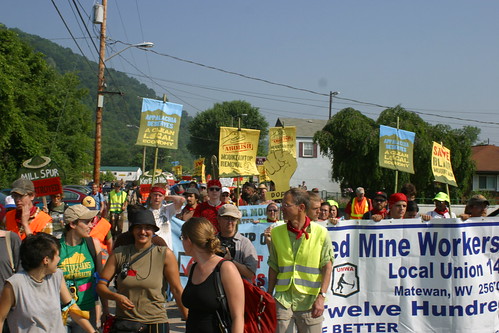
Something extraordinary is happening this week in southern West Virginia. For the first time in years, the United Mineworkers of America (UMWA), the largest union representing coal miners, has found common cause with environmental and community advocates who are seeking to end mountaintop removal coal mining.

March on Blair MountainSome UMWA miners have joined hundreds of environmental and Appalachian community advocates who are marching to Blair Mountain on the 90th anniversary of one of the greatest labor battles in American history.
Both groups want to protect this historic mountain from the efforts of coal companies to obliterate parts of the battlefield in order to conduct mountaintop removal coal mining operations.

In fact, the march to Blair Mountain is only one of several recent examples where the interests of labor and environmental advocates are closely aligned. For instance, last week’s buyout of Massey Energy was another recent event celebrated by environmentalists, community groups and organized labor alike. Massey was not only reckless, negligent and probably criminal in last year’s disaster at the Upper Big Branch Mine in West Virginia, but the company was by far the largest operator of mountaintop removal coal mines in Appalachia and a notorious scofflaw in regard to environmental laws like the Clean Water Act. Massey had also long been known for its union-busting practices.

A third – and by far the most important – factor linking the struggles of these groups is an almost existential crisis they are facing as a result of America’s recent, acute attack of what I like to call “Deficit Attention and Hypocrisy Disorder” (hat tip). The takeover of many state legislatures and governors’ offices by anti-government and anti-union ideologues last November has resulted in bills to strip collective bargaining rights of public employees in states from Ohio and Wisconsin to Florida and Tennessee — all of which, of course, is taking place under the false pretense of reducing the deficit.

Environmentalists got a similar wake-up call when the new Republican majority in the House sought to eviscerate EPA’s ability to enforce the Clean Air and Clean Water Acts through amendments to the House Budget bill last February. Again, this was all done under the false banner of reducing the deficit.

If we are going to avoid disaster in this next election cycle, then we need to break out of our circular firing squad and do our part to change the narrative – and thus the mandate of whoever controls the reins of government after the next election – away from “Deficit Attention and Hypocrisy Disorder” and back toward creating jobs and protecting the health and safety of workers and the environment in which they live.

Read more
...


AP Reporter Wins Peeew-litzer for Execrable Reporting on Stream Protection Rule


Thursday, January 27th, 2011 | Posted by Matt Wasson


[UPDATE: With the benefit of a little more time to reflect and with the help of a few angels on my shoulder, I've come to realize that my criticism of Tim Huber was over the top. While I believe that my critique of the content of the AP story was valid, there are more respectful and less polemical ways to make the point. My apologies to Tim Huber]

PeeewlitzerOK, so I made the bit up about there being a Peeew-litzer prize for execrable reporting, but if there were such a prize, AP business reporter Tim Huber would be a top candidate.

Yesterday, Huber broke a story based on a leaked draft of an environmental impact statement that is part of the Office of Surface Mining’s rule-making process for the “Stream Protection Rule.” This rule would replace the “Stream Buffer Zone” rule that was gutted in late 2008 in an 11th hour giveaway to the coal industry by the departing Bush Administration. The impact and clear intent of Bush’s change to this rule was to make it easier for coal companies to conduct mountaintop removal mining operations in Appalachia.

The lead of the AP story went as follows:

The Obama administration’s own experts estimate their proposal for protecting streams from coal mining would eliminate thousands of jobs and slash production across much of the country, according to a government document obtained by The Associated Press.

Wow, that sounds pretty bad — particularly the day after the President delivered a State of the Union address that laid out a broad plan for creating jobs and supporting American businesses. Of course, given that the leaked document is not available for public scrutiny, you might think that Huber would say a little something about what assumptions went into this calculation of job losses — perhaps even provide a little context about how they were calculated. What baseline assumptions were these “eliminated” jobs compared to? Did the agency use figures for say, 2008 when coal production was at an all time high, or did they compare their impacts to government estimates of future production? This is important because not only has coal production dropped by 10% since 2008, but recent EIA projections are that coal production will drop further in coming years and won’t return to 2008 levels until 2025.

Aside from “eliminating” jobs in the coal industry, would OSM’s rule perhaps also create jobs in other industries that would presumably replace demand for the “slashed” coal production? Was the economic analysis done by OSM mining experts, or did they work with the Energy Information Administration, which has models to address these sorts of questions in the context of overall US energy markets?

Without additional context, there’s no way to understand what these numbers actually mean. By putting them out there in sensationalist terms without any way for anyone else to see the context and assumptions that went into them, Huber has done an enormous disservice to entire debate about protecting streams from the impacts of coal mining. And while reporting on leaked documents has a long and proud tradition, isn’t there some obligation to provide essential information needed to understand what’s reported about them?

Of course, it seems that there were people outside federal and state agencies that already had their hands on the secret draft document because Huber provided a quote from the National Mining Association that could only have been made if they had already analyzed the numbers (wonder who leaked it to Huber?). Worse, Huber reported the NMA’s response without even contacting any supporters of a strong Stream Protection Rule to see if there might be different views on those numbers.

So how would mountaintop removal opponents have responded if they’d had the chance?

I imagine if Huber had asked people impacted by mountaintop removal mines above their homes they would have said that there is no economic justification whatsoever for the continued destruction of Appalachian mountains, streams and communities by coal companies. As my friend Bo Webb at Coal River Mountain Watch told the Charlotte Observer when asked about Duke Energy’s machinations over whether eliminating mountaintop removal coal purchases would be economical:

“Real people that live in communities beneath mountaintop removal sites in southern West Virginia are paying the heavy, hidden costs of coal with their health and lives. An energy company that purchases mountaintop-removal coal is taking advantage of a corrupt regulatory system that allows coal companies like Massey Energy to eliminate entire Appalachian mountains, poison its water and kill its people.”

If Huber had asked my buddy JW at Appalachian Voices he might have pointed out that the coal industry is already in decline, particularly in Appalachia. If jobs are going to be eliminated anyway, why would we want to preserve jobs at mines that destroy streams over jobs that don’t? When I asked him about it, JW, who’s about to have his first child, told me:

“When my daughter enters the workforce, she can either have A) no coal jobs and no streams or B) no coal jobs and streams. We’ll take B please.”

And if I’d been asked? Well, since Huber isn’t prepared to share the leaked document he’s reporting on, it’s tough to get too specific. But even in the unlikely case that OSM did a comprehensive economic study and found that 7,000 jobs really would just vanish off the employment map, let’s put that number in perspective. If those surface mining jobs were eliminated over a 5 year period as existing permits expire, the challenge for legislators like Senator Manchin would be to find a way to create an additional 1,400 non-mining jobs or so per year (perhaps more, as mining jobs pay well) in order to rein in the wholesale destruction of streams in Appalachia by mountaintop removal mining and the pollution of streams across the country with mine waste.

And it’s not like it takes a lot of creative thinking to figure out how those jobs could be replaced: the Appalachian Regional Commission released a study and blueprint for how 15,000 jobs per year could be created in Appalachia every year for the next five years in energy efficiency — if policy-makers would make fairly modest investments in policies to stimulate the creation of those jobs. As a West Virginian who commented on the story at the Charleston Gazette website pointed out,

“It’s called ‘progress.’ We don’t use whale oil for light anymore do we?”

No we don’t. And I bet lot of jobs were lost in the whaling industry after Edison invented the light bulb along with coal-based electricity generation technologies… was that bad for society over the past century?

I recently heard a pretty smart guy say:

“Sustaining the American Dream has never been about standing pat. It has required each generation to sacrifice, and struggle, and meet the demands of a new age… So instead of subsidizing yesterday’s energy, let’s invest in tomorrow’s.”

We should listen to him.

EPA Vetoes Massive Mountaintop Removal Mine — Now Buckle Up for the Backlash


Wednesday, January 19th, 2011 | Posted by Matt Wasson


Mountain near Rawl, West VirginiaIn the wake of EPA’s veto last week of the largest mountaintop removal mine permit ever proposed in West Virginia, the grandstanding of West Virginia politicians and “sky is falling” rhetoric from the coal industry was not surprising. Every effort to protect streams and communities from the devastating impacts of mountaintop removal has been met with a similar chorus of complaint by coal companies and local politicians.

However, the immediate response of coal industry groups and West Virginia politicians to the news of EPA’s action was a little different this time around. Notably absent was any reference to the so-called “War on Coal,” which had previously been a mainstay of the coal industry’s talking points. Instead, every West Virginia politician and coal industry trade group that issued a response to EPA’s action appeared to be reading from the same script – a new one focused on broad national implications of EPA’s action for all US industries, not just coal. Apparently we are now to believe that the opposition of West Virginia politicians to any and all regulations protecting streams from obliteration by coal companies is not about any provincial concerns or pressure from the most powerful industry in their district, but about “regulatory certainty,” national energy supply, national security and the unemployment rate.

The new narrative about overbearing federal regulators stifling the economy and threatening national security fits nicely with the ideological persuasions of many new members of Congress. They would seem to be the primary target of the coal industry’s new PR strategy, the goal of which is clearly to convince Congress to rein in the EPA and prevent the agency from promulgating new rules or enforcing existing ones. And the centerpiece of this new narrative is EPA’s veto of the Spruce permit, which, it is increasingly apparent, was part of the coal industry’s game plan all along.

Read more
...


Kentucky’s Investigation into Coal Company Water Violations Should Dig Deeper


Wednesday, December 8th, 2010 | Posted by Matt Wasson


Toxic Runoff from a Valley Fill in Eastern KentuckyLast Friday the State of Kentucky announced that they had negotiated a $660,000 settlement with three coal companies over 2,765 water quality related violations at 103 coal mining operations in Kentucky. Based on a recent analysis by Appalachian Water Watch team, however, the state’s investigations may not have dug deeply enough.

The long list of violations for which the state did cite coal companies included:

  • Failure to maintain required records;
  • Improper operation and maintenance;
  • Improper sample collection;
  • Failure to comply with the terms of the permit;
  • Failure to utilize approved test procedures,
  • Degrading the waters of the Commonwealth.

As the office of Governor Beshear announced on Friday, the state initiated its action in response to a 60-day Notice of Intent to Sue (NOI) against three coal companies – ICG Knott County, ICG Hazard, and Frasure Creek Mining – submitted by Appalachian Voices, Kentuckians for the Commonwealth, Kentucky Riverkeeper and Waterkeeper Alliance on October 7th. The NOIs detailed numerous examples of the three companies exceeding pollution discharge limits in their permits, consistently failing to conduct the required monitoring of their discharges and, in many cases, submitting false monitoring data to the state agencies.

Appalachian Voices and allies were generally pleased that the state’s investigations confirmed our allegations that mining companies in Kentucky have been irresponsibly monitoring and failing to accurately report their harmful discharges into rivers of the state. But what the state did not hold the companies liable for, indeed attributed to clerical errors, were allegations in the NOI of “falsifying the required monitoring data.” Specifically, the NOIs demonstrated that on many occasions, companies submitted duplicate monitoring reports in which only the dates on the forms were changed. As the Appalachia Water Watch team reported in October:

“The claims brought today may just be the tip of the iceberg when it comes to irresponsible mining reporting practices and a failure in the state’s monitoring program. A recent trip to Kentucky’s Division of Mine Reclamation and Enforcement regional offices by Appalachian Voices’ Waterkeeper found stack after stack of discharge monitoring reports (DMRs) from more than 60 coal mines and processing facilities covered in dust on the desks of mine inspectors’ secretaries. They did not appear to have been evaluated for compliance by the regulators for more than three years. A sampling of the reports showed hundreds of repeated violations by coal mine operators in the state.”

Read more
...


Breaking: Mountaintop Removal Begins on Coal River Mountain — Help Needed Now!


Saturday, October 24th, 2009 | Posted by Matt Wasson


BREAKING NEWS: Reports are coming in from residents of West Virginia’s Coal River Valley that Massey Energy has begun mountaintop removal mining operations on Coal River Mountain. Sprawling across thousands of acres of diverse and pristine hardwood forests, this mountain is home to the tallest peaks ever permitted for destruction in the state of West Virginia. The mountain also became a powerful symbol of hope for a better future in the Appalachian coalfields after a study showed those peaks and ridges have wind resources as high as “Class 7,” which is the highest rating on the scale.

Take Action here

Local residents have rallied around a proposal for a 328 Megawatt wind farm and put up a website, coalriverwind.org, to promote their vision. The wind farm would, over the course of a few decades, provide far more jobs in the community than those created during the few years it would take Massey Energy to reduce the mountain to a flat, barren, and toxic wasteland. Just a few days ago, the AP reported that a local organization, Coal River Mountain Watch, has been working with Google Earth to design a presentation that will be shown at the UN Climate Conference in Copenhagen, contrasting the proposed wind farm with Massey Energy’s plans for more than 6,000 acres of mountaintop removal coal mining on the mountain.

A 328 Megawatt wind farm versus a 6,000 acre mountaintop removal coal mine — there could be no better symbol of the crossroads we are at in America’s energy future. Whichever way it goes, the fate of Coal River Mountain is America’s energy future. If the coal companies can mine Coal River Mountain, they can do anything they want. If they can destroy these peaks, we’ll know exactly what the effect that the billions in tax-payer giveaways to the coal industry will have if the climate bill is passed.

What’s at stake

There’s far more than just a wind farm at stake when it comes to the destruction of Coal River Mountain, however, both for residents of the Coal River Valley and for people across the country who believe that a clean energy future is within our grasp.

For local residents, this is the last intact mountain in the vicinity, home to some of the few remaining headwater streams that have not been polluted with heavy metal-laden mine waste. If Massey Energy’s plans aren’t stopped, they know exactly what’s in store – just a few weeks ago, a local Eyewitness News story about 200 families in the town of Prenter who are suing 9 coal companies for contaminating their well water with coal waste began as follows:

“Twenty-two year old Josh McCormick is dying of kidney cancer. Twenty-six year old Tanya Trale has had a tumor removed from her breast; her husband has had two tumors removed from his side and both have had their gallbladders taken out.

Rita Lambert has had her gallbladder removed; so has her husband and both parents.

Jennifer Massey has a mouthful of crowns and so does her son after their enamel was eaten away, and six of her neighbors – all unrelated – have had brain tumors, including her 29-year old brother, who died.

Bill Arden is one of those neighbors. He survived his brain tumor, but Arden’s eight-year old boxer named Sampson did not.

What do all of these people have in common? They all live within a 3-mile radius of Prenter Hollow in Boone County, West Virginia. And all have well water.”

As usual, despite overwhelming evidence that it’s the sludge they have been pumping into underground mine shafts that contaminated the groundwater, the coal companies deny any connection to the problem.

On Coal River Mountain, less than 100 yards from where the mining has begun, lies the Brushy Fork coal slurry impoundment, a massive earthen dam holding back 8.2 billion gallons of toxic coal sludge. Were that dam to fail, as several have done in the recent past, hundreds of lives could be lost in a matter of minutes and thousands would be put in jeopardy. Even short of complete dam failure, the risks to local communities are great. The ground beneath the impoundment is riddled with abandoned underground mine shafts, leaving many local residents with little doubt that some of that toxic slurry will end up in their groundwater as the foundation-shaking blasts of ammonium-nitrate explosives begin cracking rock strata and exposing aquifers to the contaminated water.

Outside the Coal River Valley and across the nation there is also a lot at stake — especially for the millions of young people who turned out en masse during last November’s election, believing they could take their country back from the powerful special interests that pulled the strings of government over the preceding eight years. Just this weekend, thousands of students are attending regional “Powershift” conferences, learning what they can do to bring about their vision of a new future and a new energy policy build around efficient use of clean and renewable energy technologies.

Those same young people who came out by the thousands chanting “Yes We Can!” last fall are soon going to learn whether that slogan applies to them, or really just to powerful corporations with a lot of money and political influence. Today, it’s coal companies like Massey Energy that are claiming the “Yes We Can!” slogan:

“Yes we can destroy your mountains, drinking water, and dreams for a better future. Yes we can threaten and intimidate you at public hearings and drown out your voice.
Yes We Can!

Just last week, the same Administration that donned the mantle of “Hope” and “Change” held public hearings on the rubber-stamp permitting of mountaintop removal in which the Army Corps of Engineers allowed mobs ginned up by the coal companies to threaten, intimidate and drown out the voices of people brave enough to speak out against the destruction of their homes, communities and mountains.

But it’s too soon for those young people to return to the feelings of disenfranchisement and cynicism that has characterized their age group for the past few decades. The Obama Administration has begun taking small steps to rein in mountaintop removal mining, and recently threatened to veto the largest mountaintop removal permit ever proposed in West Virginia. For even those baby-steps, they are facing a massive push-back from the coal industry. But its not nearly enough to make tweaks to the permiting process while letting mountaintop removal continue under the industry-friendly rules rigged by the Bush Administration. The Administration needs to hear from us – to hear from you.

It’s time we demand the “change” we were promised, and Coal River Mountain, the most powerful symbol of the difference between the destructive and climate change-denying policies of the past and the promise of a new future, is the line in the sand. Coal River Mountain must be saved.

The Administration has been hearing a lot from the coal industry, but have they heard from you? If not, you can start by calling the White House and making your voice heard. Here’s a link for more information: www.ilovemountains.org/coalriver/.

Next, sign up to for the e-mail list to stay informed and engaged in the campaign. It’s not a scam, your e-mail address won’t be traded or sold, so get over it and sign up – you can’t stay engaged and make a difference if you don’t stay informed. Here’s the link.

And finally, tell a friend, recruit a co-worker, or post the news to a list or a blog.

The mission is clear; the stakes couldn’t be higher; the fate of Coal River Mountain and our energy future are up to you. The time to act is now.

Cross-posted with iLoveMountains.org

All Hands on Deck for Virginia!


Thursday, May 1st, 2008 | Posted by Matt Wasson


Larry Bush, Pete Ramey, and Kathy Selvage; Citizens of Wise County and founders of the Southern Appalachian Mountain Stewards

One week from today, citizens of Wise County, Virginia, will deliver a mile-long petition to Dominion Resources opposing their plans for a dirty coal fired power plant in Wise County. If you don’t know the background of this campaign yet, click here to learn more.

As you can see from the petition-meter on the right, we still have a lot of petition signatures to gather, and this is where you come in. We have done our best to make it easy for you to organize your networks in support of the people of Wise County who are fighting this terrible threat. Here’s what you can do:

Put a petition-meter on Facebook

Click here to add the NO DIRTY COAL PLANT! Petition to your facebook profile. But don’t just add it, tell your friends about it and encourage them to sign the petition and put a meter on their own profiles.

Put a petition-meter on a website or blog

Click the “Adopt a Yard” button on the petition meter on the right, and it provides instructions on how to put a meter on almost any website.

Send an alert to your lists or post one to your blog

people can sign the petition by going to: http://www.appvoices.org/index.php?air/vapetition
and they can learn all about the campaign at:

http://cleanenergyva.org/?p=44

Thanks for your help and we’ll keep you updated on the campaign.

Sign the Mile-Long Petition for Clean Energy in Virginia!


Wednesday, April 16th, 2008 | Posted by Matt Wasson


You don’t have to be a Virginian to be affected by the pollution from Dominion’s proposed coal-fired power plant in Southwest Virginia, and wherever you’re from, the folks in Southwest Virginia could sure use your help in their fight to save their homes and community from mountaintop removal and (to add insult to injury) another coal-fired power plant Dominion’s proposing to build in their back yard.

So SIGN THIS PETITION – and if you have a blog or Facebook account, click the “Adopt a Yard” link, copy the code and put a petition meter on your site.

We have three weeks to make this a mile long, so y’all pitch in now!

D.C. Circuit Court Declares EPA’s Mercury Rule Illegal


Friday, February 8th, 2008 | Posted by Matt Wasson


Absolutely tremendous news from the Waterkeeper Alliance who was the lead group on the lawsuit challenging the Bush Administration’s evisceration of mercury control laws in 2005. Here’s the press release from the Waterkeeper Alliance:

Irvington, New York (February 8, 2008) – In a complete victory for public and environmental health, the U.S. Court of Appeals for the District of Columbia today invalidated a pair of EPA rules that would have allowed coal-fired power plants to overwhelm waterways, fish and communities with harmful levels of mercury for decades to come. The Court found EPA’s 2005 rules removing power plants from the Clean Air Act’s list of toxic sources and creating an anemic “cap and trade” regulatory scheme to be in violation of the Act.

Waterkeeper Alliance, as part of a coalition of a number of public health and environmental groups, fourteen states and dozens of Native American tribes, launched its challenge of EPA’s mercury rules over two years ago. Today, the Court, in striking down EPA’s actions, found that the Bush Administration’s explanation for delisting power plants “deploys the logic of the Queen of Hearts, substituting EPA’s desires for the plain text of (the Clean Air Act.)”

Power plants, the largest source of manmade mercury in the country, spew 48 tons of the dangerous neurotoxin into the air each year, while a single gram – 1/70th of a teaspoon – of mercury per year is enough to contaminate a 25-acre lake to the point that fish are unsafe to eat. EPA estimates that as many as 600,000 babies may be born in the United States annually with irreversible brain damage because pregnant mothers ate mercury-contaminated fish. Mercury risks also include delayed developmental milestones, reduced neurological test scores, and cardiovascular disease. Nearly one-third (32 percent) of America’s lakes and nearly one-fourth (24 percent) of our rivers were subject to advisories for mercury contamination in 2003.

Despite the devastating impact these emissions are having on the environmental and human health of the nation and clear mandates under the Clean Air Act, EPA has steadfastly refused to regulate power plant mercury pollution, instead coming up with a non-control plan that allowed the energy giants to continue emitting significant amounts of mercury. “These rules represented what was perhaps the biggest sellout to industry in the history of EPA,” said Waterkeeper Alliance Legal Director and attorney on the case, Scott Edwards. “It’s a real tragedy that we’ve had to spend two years getting this industry-scripted scheme struck down while energy companies continue to poison our children with mercury.”

With EPA’s delisting action declared illegal, the Agency is now obligated to develop “Maximum Achievable Control Technologies” standards for power plant mercury emissions. Several U.S. Department of Energy studies conducted over the past few years have demonstrated that upwards of 90 percent of power plant mercury emissions can be eliminated using affordable and available reduction technologies.

“This is a very positive ruling, but we should not forget that no matter how much this industry reduces mercury emissions, coal will never be clean,” added Waterkeeper Alliance President Steve Fleischli. “From mining to burning to toxic ash, ‘clean coal’ is a sham, a dangerous diversion at a time when we must move our national energy strategy to sustainable, renewable energy sources.”

Click here to download the 18-page opinion.

Residents from the Coalfields take the UN by storm


Tuesday, May 8th, 2007 | Posted by Matt Wasson


Dispatches From UN Commission on Sustainable Development:
Delegates Living On the Front lines of Energy Extraction Speak Out

We went to the Climate change-energy industry blueprint on how to tackle climate change.

One man, Kurt Yeager from Electric power research institute gave a presentation on roadway to a low carbon future. Talking about different 3 phases. The first phase was the only one i was able to write down. By 2015 credible commitment and slower CO2 emissions growth.

So I ask him “How are you accounting for the cost of the full cycle of carbon?” He basically responded saying he could not put a price on it. I told him to tell my daughter he can’t put a price on her health. Then Lauren asked some stuff.

After the meeting was over, Chuck went over to Mr. Yeager and asked him about the extraction of coal and what extraction method he was planning on using to mine the coal. And he said basically that he knows there are problems with mining coal in Appalachian, but more or less he said that was the answer to our energy needs and we cannot put a price on the extraction of coal. Chuck then said what about the people of Appalachia are they going to have to pay the price of this extraction?

He said more or less we have to stick w/ coal and he said he was from Appalachia and he understood the problems that Appalachia faced. Earlier in the dialog Mr. Yeager had said, “I know what you all are talking about, I am from Appalachia and live with this stuff too”. Chuck asked him what part of Appalachia and he said Youngstown, OH. Then Chuck told him he don’t live in the coal fields he more or less lived in the coal fire power plant area. Chuck told him he didn’t know anything about the process of mining coal. Or what the true cost that coal really is. Chuck told him about people loosing their property, flooding out, contaminating water, being blasted out from MTR. He started laughing.

Chuck said “Why are you laughing, you think it is funny having to live like that?” He just had a lack of concern He said he wasn’t throwing the baby out with the bathwater, and Erica said speaking of babies in bathwater. I just found out for 3 yrs I was bathing my daughter in water with high levels of Arsenic in it. He just said that was too bad.

He pretty much said whatever he thought we wanted to hear. I think Chuck did a great job. I was very impressed with the fact that Chuck just walked right up to this man and said what he wanted to say. I was very inspired listening to Chuck.

More Photos from the U.N.


Tuesday, May 8th, 2007 | Posted by Matt Wasson


Here are a few more photos from the Coalfield delegation at the U.N:

image
Larry Gibson of the Keepers of the Mountains Foundation and OVEC, in front of the legendary United Nations building.

image
The coalfield delegation along with sponsors from the Citizens Network, plot a takeover strategy on Sunday at “The Loft” – a facility in Manhattan owned by Appalachian State University.

image
Ann League and Kevin Pentz of Kentuckians For The Commonwealth looking “inconspicuous” and trying to figure out what’s so “Sustainable” about more use of fossil fuels at a U.N. Session on”Sustainable Energy.”

image
Ann League and Lauren McGrath of Save Our Cumberland Mountains , on their way into the U.N. on Monday.

Sustainable WNC website launched


Wednesday, March 28th, 2007 | Posted by Matt Wasson


A new web portal, www.sustainablewnc.org was recently launched to connect and inform businesses, nonprofits, citizens and local governments that are working to promote the principles and practices of sustainability in western North Carolina. According to editor, Richard Fireman:

Many people worldwide have come to realize that humanity is at an evolutionary crossroads. Successful transformation of human society from its over consumptive, self destructive path to sustainable earth community requires the creative imagination, courage, and determination from all segments of human culture – individuals, business, government, civic institutions, and grassroots organizations. I have joined www.sustainablewnc.org in order to help catalyze this transition through education, news, collaboration, and dialogue with the people of Western North Carolina.

Richard has been doing excellent work to connect and support sustainably-minded groups and businesses in Western North Carolina for years, and it looks like this latest project will quickly become an indispenable news and information source. Check it out at www.sustainablewnc.org

North Carolina Lawmakers Make Rare Call for Delay in Coal Plant Permitting Process


Wednesday, February 21st, 2007 | Posted by Matt Wasson


imageA group of North Carolina lawmakers called on the North Carolina Utilities Commission to enact a 90-day suspension of the permitting process for Duke Energy’s proposed 1,600 Megawatt expansion of it’s Cliffside Power Plant near Charlotte. Critics contend that the plant will not only create a significant increase in global warming pollution (the proposed plant will use conventional pulverized coal burning technology), but imposes huge financial risks on ratepayers, who will foot the bill for what may well be a $4 billion investment in new technology.

With 61% of North Carolina’s electricity already supplied by coal, the project will also do nothing to diversify the state’s energy base.

According to the Raleigh News and Observer:

The utilities commission was expected to rule this month on Duke Energy’s application, but the legislators say they want the Charlotte-based utility to open its books and provide more information on the cost estimates for the project.

The lawmakers, including Rep Paul Luebke, a Democrat from Durham, also want state regulators to give greater weight to energy alternatives — such as renewables and efficiency programs — as they consider Duke Energy’s application amid increasing concerns about global warming.

At a press conference in Raleigh, the legislators announced a bi-partisan sign-on letter to the utilities Commission that they expect a dozen or more legislators to sign requesting the 90 day delay and a more transparent process. In particular, legislators cited the increasing costs of coal, and Duke Energy’s refusal to disclose the details of how they are accounting for future coal costs to the ratepayers who will foot the bill, as causes for significant concern.

Speaking at the press conference were Representatives Paul Luebke (D-Durham), Susan Fisher (D- Buncombe), Jennifer Weiss (D-Wake). Senator Stan Bingham (R-Davidson) was one of the lawmakers who called the press conference, but was unable to attend due to an extended committee meeting. Also speaking and fielding questions was Appalachian Voices’ field organizer Austin Hall. Appalachian Voices has been working with the group of legislators to draft and gather signatories on the letter.

image
image

The announcement was also covered in the Charlotte Observer.

The complete text of the letter that lawmakers are sending to the Utilities Commission follows:

February 22, 2007

Renne C. Vance, Chief Clerk
NC Utilities Commission
4323 Mail Service Center
Raleigh NC 27699-4325

Re: Docket No. E-7, Sub 790 (Cliffside)

Dear Ms. Vance,

The lack of transparency in the proposal by Duke Energy to build two conventional, 800 megawatt coal-fired units at its existing Cliffside Steam Station in Rutherford and Cleveland counties is a source of great concern to the undersigned. Based on the arguments presented in two rounds of formal evidentiary hearings before the Utilities Commission, it is our belief that information that was not made publicly available regarding the Cliffside project could pose substantial financial risks to North Carolina’s ratepayers. In order to better evaluate those risks, we recommend a 90-day temporary suspension of issuance of the Certificate of Public Convenience and Necessity and the release of information used to project the financial consequences of the project.

The project’s total cost, now estimated at $3 billion, a 50 percent increase in the last year alone, challenges the North Carolina Utilities Commission mandate to ensure the “public convenience and necessity” of the proposal. The opportunity for a fair and open comparison of costs between the project and alternative measures such as demand side efficiency and alternative energy sources should be provided to the citizens and ratepayers of North Carolina before they are forced to foot the bill for billions of dollars of expensive new investments.

The project’s price increase also calls into question the accuracy of certain other cost projections that were used by Duke Energy including coal prices, which have increased significantly in recent years. For instance, the respected energy consulting firm Hill and Associates said in their 2006 Central Appalachian Coal Summary: “Since 2003, mining costs in Central Appalachia have risen roughly 45% from the upper $20s to the lower $40s per ton, establishing a new base platform for coal pricing.” If Duke Energy did not adequately account for these increases, similar to what has already occurred with construction costs, the resulting increases in electric rates will fall to ratepayers, not to Duke Energy shareholders. A 2006 fuel clause adjustment for Duke Energy, for example, found an increase in the utility’s rates, and thus higher bills for ratepayers, without any direct benefits in the form of new jobs, economic growth or improved health and environmental quality.

Duke Energy may also have underestimated the long-term costs of the proposed units with regard to the risk of mandatory carbon regulations. It is likely that if these units are fully operational by 2011, and will operate for 40 or more years, they will be subject to federal regulation of carbon dioxide. Cliffside’s carbon liability and associated future costs would be borne by ratepayers.

Because Duke Energy’s proposal provided insufficient transparency and information to ensure a fair and unbiased decision on the risks, costs and benefits of expanding the facility, the proceedings should be temporarily suspended for a period of 90 days. During this period we request that the public be provided access to the inputs and assumptions of Duke Energy’s cost estimation models.

George W. Bush, Environmentalist?


Tuesday, November 14th, 2006 | Posted by Matt Wasson


Steven Hayward, a Resident Scholar at the American Enterprise Institute, reported this week on NPR’s Living on Earth that the president has been striking a different tune on energy and environmental issues of late.

Mike Allen [from Time] reported that he was talking to a senior White House official who said that Bush was getting ready to do a 180 on climate change and describe it as in the old cliché as a Nixon in China moment. The actual quote that appeared was that only two oil men could get all the players to the table, including the oil and auto industry, to broker some large and grand compromise on this.

And I’ve heard separately from people who have had casual lunches or dinners with Bush recently that one of the things he’s changed his mind about was environmental issues.

Now let’s put this in the context of the recent elections.  Most of us have taken Bush’s post-thumpin’ willingness to work with Democrats with a near-lethal dose of salt, but there may actually be something to it, if, like many presidents before, he spends his final two years giving greater consideration to his legacy.  While it’s clear Bush considers Iraq as central to his legacy, an increasingly loud chorus of voices around him are saying that 8 years of inaction on global warming could be the legacy he is most remembered for.

Here’s what retired Republican Congressman Sherwood Boehlert said on the same episode of NPR’s Living on Earth:

“I point out to the detractors in my party that even the President of the United States concedes that global warming is for real. I’ve talked to him about this subject one on one. And I’ll tell your listeners just what I’ve told him. I’ll say, “Mr. President, every time I talk with you on a sensitive issue that might be divisive like global climate change, I always feel better after talking with you.” And then I pause for effect. “It’s your staff that screws it up.” And he usually laughs. But I really do feel that he gets it more than some of his staff people get it. And no president wants to leave after two terms in the White House without a sense that history will treat him well. And this is one area where I think the President has an opportunity to address, in a responsible way, something that is important to all Americans and I just have a gut feeling that he’s going to do it.”

So… What if the president really is willing to play ball with the democrats on energy and the environment in his final two years (it may be the ONLY place where they could even hope to find common ground)?  Will the Republicans in Congress play ball (at least 10 of them in the Senate, that is)?  Republicans who are concerned about the results of this year’s elections might actually be willing to, as there’s little question that the environment was one of the big winners of the election.

From the defeat of Richard Pombo and dozens of Republicans with awful environmental records, to the replacement of James Inhofe with Barbara Boxer as the Chair of the Senate Environment and Public Works Committee, it’s a new day for those of us working for an energy future in that makes sense.

Let’s review some of the results of the election:

1. Environmental groups, led by Defenders of Wildlife, were instrumental in defeating legendary anti-environmentalist Richard Pombo.  Rarely has the ability of environmentalists to flex electoral muscle been so convincing.

2. Voters in Southern Arizona just elected Gabrielle Giffords, whom the Sierra Club calls an environmental champion, and Jerry McNerny, who defeated Pombo, is the first alternative energy expert in Congress. He’s a wind energy engineer.

3. John Tester, who defeated Conrad Burns of Montana in the senate, is an organic farmer.

4. Washington State passed an initative requiring that a major portion of the state’s electricity come from renewable power: 15 percent by 2020.

5. California Democrat Henry Waxman now chairs the House Government Reform Committee, and his investigations into the last 6 years of energy policy will help to further discredit the power of big energy companies.

6. A whole host of the congressional darlings of the energy industry were just voted out of office.  A few weeks ago, I wrote about how the biggest recipients of coal industry money in both the house and senate were in danger of losing their seats.

Of the top 15 recipients of Coal Industry campaign contributions in the House, 6 lost their seats and several more squeaked by.  Coal darlings that lost there seats were:

Murphy, Tim (R-PA, #1 in contributions from big coal, 2005-2006)
Ney, Bob (R-OH, #2 in contributions from big coal, 2005-2006)
Hart, Melissa (R-PA, #8 in contributions from big coal, 2005-2006)
Pombo, Richard (R-CA, #9 in contributions from big coal, 2005-2006)
Hostettler, John (R-IN, #11 in contributions from big coal, 2005-2006)
DeLay, Tom (R-TX, #15 in contributions from big coal, 2005-2006)

Those that barely held on to their house seats were:

Davis, Geoff (R-KY, #3 in contributions from big coal, 2005-2006)
Cubin, Barbara (R-WY, #5 in contributions from big coal, 2005-2006)

Things didn’t go any better for the coal darlings in the senate:

Santorum, Rick (R-PA, #1 in contributions from big coal, 2005-2006)
Allen, George (R-VA, #2 in contributions from big coal, 2005-2006)
Talent, James M (R-MO, #3 in contributions from big coal, 2005-2006)
DeWine, Mike (R-OH, #6 in contributions from big coal, 2005-2006)
Burns, Conrad (R-MT, #14 in contributions from big coal, 2005-2006)

And Jon Kyl (R-AZ, #8 in contributions from big coal, 2005-2006) didn’t exactly cruise to victory, though his final victory margin was healthy.

As it turns out, that may be attributable to more than bad fortune on the part of the coal industry.  Mike Bocian, an Associate Vice president at Greenberg Quinlan Rosner Research Firm, said in another interview with Living on Earth:

“We did a survey immediately after the election, and if you look at those voters who voted for the Democratic candidate but considered voting for the Republican, the number one concern that they had about the republicans is that they did nothing about the oil companies and the high gas prices. The voters learned about and were extremely frustrated that their Congress and their President had given large tax breaks to the oil companies at a time when gas prices were extremely high and the oil companies were making billion dollar profits.

That was one piece. The second piece was the positive side: the investment in alternative energy. And the voters believe that we are decades behind on investing in alternative energy and ending dependence on foreign oil and they haven’t seen the commitment they’re interested in on that issue.”

So, with many of the biggest allies of coal out of the picture, the will to suffer the inevitable PR nightmare of filibustering alternative energy bills and climate change legislation may not be sufficient.  Then again, the prospect of Mitch McConnell as minority leader makes that considerably more likely.  Regardless, nothing would help Democrats in 2008 more than Republicans falling on their swords to protect Big Coal and Big Oil.

My view is that we should do everything we can to invite and encourage the President to work with us.  While some may find the prospect of helping Bush salvage his legacy distasteful, the prospect of continuing in the wrong direction on energy and climate, at a time when a whole new generation of coal-fired power plants are proposed over the next few years, is far, far worse.  

For the sake of our children and our planet, all hail President Bush the Environmentalist.