Get Our RSS Feed!
Front Porch Blog


Kentucky’s Lab Certification- Is it strong enough?


Wednesday, May 1st, 2013 | Posted by Eric Chance


Yesterday, Appalachian Voices submitted public comments on a proposed wastewater lab certification program in Kentucky. To discharge polluted water, coal companies must receive a permit under the Clean Water Act. This permit that requires companies to test wastewater and report the data to ensure it falls within the limits of the permit. In Kentucky, there are currently no standards for labs that do this type of testing.

The proposed certification program is a direct result of the lawsuits for falsified water monitoring data we filed against three of the state’s largest coal mining companies. Our investigation revealed that many coal companies were repeatedly submitting the same data and knowingly leaving out reports of any violations of their permits. After we filed these lawsuits, the Kentucky Energy and Environment Cabinet inspected the labs being used for this monitoring and found that in many cases they were not even capable of correctly performing the required tests.

This graph shows some of the inaccurate data submitted by Frasure Creek Mining before our lawsuits lead them to start using a new lab. Click to enlarge.

We believe that enforcing standards on labs used by coal companies will help ensure that labs report accurate data, and that the regulations meant to protect water and those that depend on it from dangerous pollution are effectively enforced. This proposed rule will be a big step forward and we have applauded the cabinet for its efforts to fix these problems. However, there are several weaknesses in the rule that we hope are fixed before it is finalized.

All too often the cabinet has failed to live up to its obligations to protect the people and environment in Kentucky. That is why our comments suggest that discretionary duties given to the cabinet in this rule be made mandatory. Appalachian Voices will continue to work to require the state agencies to actually enforce these standards.

>>Click here to see our comments
>>Click here to read the proposed lab certification rule
>>Click here to read the draft lab manual

Coal Ash Floods Congress and the Courts


Tuesday, April 23rd, 2013 | Posted by Brian Sewell


e. The trend is likely to continue until EPA announces clear rules to regulate the to

Since the 2008 Kingston, Tenn., coal ash spill, the toxic waste has been hotly debated in the media, Congress and the courts.

On April 11, the U.S. House of Representatives Subcommittee on Environment and Economy held a hearing in part to promote the Coal Ash Recycling and Oversight Act of 2013, drafted legislation that would prevent the EPA from implementing federal regulation of coal ash, leaving regulation up to the states.

Some witnesses, including the former director of the Mine Safety and Health Academy, Jack Spadaro, and Lisa Evans, an attorney for Earthjustice focused on hazardous waste, testified against the draft, which is modeled on past legislation that failed and was called “unprecedented” in environmental law by the nonpartisan Congressional Research Service.

“Without a doubt, when mismanaged, coal ash harms Americans nationwide by poisoning water and air and by threatening the very existence of communities living near high hazard dams,” Evans said at the hearing. “We must work together to establish regulations that foremost prevent injury to health and ensure the safety of all communities.”

Spadaro, who has been involved in the evaluation and regulation of coal waste dams since 1972 and wrote federal and state regulations governing the structural integrity of dams in the wake of the Buffalo Creek Flood, cautioned subcommittee members against moving ahead with the draft. According to Spadaro, the proposed legislation lacks the adequate engineering requirements and enforcement by a federal agency necessary to prevent another spill similar to the TVA disaster that would lead to irreversible environmental damage and possible loss of life.

“There are thousands of such structures in the United States at this time,” Spadaro said, “and the failure of one or more of these dams is assured unless strict engineering standards are imposed.” The Southeast is home to 40 percent of the nation’s coal ash impoundments, and according to the EPA, contains 21 of the nation’s 45 high hazard dams.

Read more
...


EPA Releases Proposal To Update Clean Water Act Standards for Power Plant Pollution


Monday, April 22nd, 2013 | Posted by Sandra Diaz


The U.S. Environmental Protection Agency has finally proposed a range of options to regulate waste water from power plants which are responsible for half of the nation’s water pollution. While the public comment period has yet to begin, a public hearing is schedule for July 9th in Washington, DC.

More details on the rule itself, and how to submit your comments will be become available on appvoices.org/rww/power-plant-waste/

Below is a press statement from Appalachian Voices and a number of allied organizations.

After 30 years of inaction, EPA finally proposes plans for power plant water pollution includes options protecting waters from toxic pollution as well as weaker standards that maintain the status quo

Washington, D.C. – The Environmental Protection Agency proposed a number of regulatory options late last Friday night, known as steam electric effluent limitation guidelines for power plants, two of which will finally clean up water pollution from hundreds of power plants.

Power plant water discharges are filled with toxic pollution such as mercury, arsenic, lead, and selenium – heavy metals that can cause neurological and developmental damage, cause harm in utero, damage internal organs and cause cancer. Power plants are the biggest sources of water pollution in the country, yet the EPA has not reviewed regulations for this industry in more than 30 years. To address this unacceptable delay, environmental groups filed a lawsuit in 2010 to force the EPA to take action and regulate this dirty industry.

Read more
...


Clean Water News: Congress Backs Down, N.C. Steps Up


Tuesday, March 26th, 2013 | Posted by Sandra Diaz


Thallium was once used as rat poison. Now DENR is suing Progress Energy for Thallium polluting the French Broad River from its Asheville power plant.

Last week, there was concern that the U.S. Senate budget resolution would end up containing measures to decrease funding for initiatives of the U.S. Environmental Protection Agency such as the release of guidelines for coal ash disposal and rules to ensure states are following water quality standards. Thanks to good Americans like yourself speaking up, the Senate budget remained free of dirty water amendments.

While the budget resolution is non-binding, and the Senate Appropriations Committee decides how funding gets allocated later in the process, the resolution send a strong message regarding the Senate’s priorities. Unfortunately, one of the more controversial amendments that did pass was in support of building the Keystone XL pipeline.

While the Senate backed down on loading up the budget resolution with dirty water clauses, the North Carolina Department of Environment and Natural Resources stepped and up and decided to take legal action against Progress Energy for the release of toxic heavy metals from their Asheville plant into the French Broad River. 

Western North Carolina Alliance, Sierra Club, and Southern Alliance for Clean Energy had filed a notice of intent to sue Progress Energy for violating the Clean Water Act for unpermitted seeps into the French Broad River. It appears DENR took notice and is now taking up their own case against Progress Energy. DENR is seeking injunctive relief and demanding Progress Energy solve the issue in lieu of the state seeking monetary damages.

Read more
...


Will This March Madness Be An Upset for Clean Water?


Friday, March 22nd, 2013 | Posted by Sandra Diaz


Basketball

Help Prevent a Clean Water Upset (Picture by mvongrue, hosted by Flickr)

UPDATE: The Senate Budget Resolution passed without any of the amendments mentioned below. Victory!

As most of you know, between the federal House of Representatives and the Senate, the Senate is usually the level-headed older brother of the family and tends to be a more deliberative legislative body. But this month the Senate decided it wanted to shake things up a bit by creating a little March Madness of its own.

The Senate is going through a seemingly insane process known on Capitol Hill as a vote-a-rama to reach a deal on a final Senate budget resolution. Senate leadership is allowing any number of amendments to be presented and voted on — whatever they can get done in 50 hours.

While all the amendments have yet to be presented, several of them take aim at the U.S. Environmental Protection Agency’s ability to do its job, which is to protect our air, water and public health. Some of the amendments could stop the EPA from:

    - Making sure states are complying with and improving water quality standards in accordance to the Clean Water Act.
    - Creating national standards for how coal ash, the toxic waste produced by coal-burning for electricity, is disposed and stored.
    - Restoring critical Clean Water Act protections to streams, wetlands and drinking water standards.

TAKE ACTION: We are asking supporters to contact their Senators. If you haven’t yet, there is still time.

Read more
...


Canvassing Against Coal Ash


Friday, March 15th, 2013 | Posted by Matt Grimley


The Red, White & Water team hit the streets near Belmont, N.C., to speak with residents who live near Duke Energy's G.G. Allen Steam Station about the threats of coal ash pollution.

Last Saturday, the Red, White and Water team traveled to Belmont, N.C., to the G.G. Allen Steam Station for a day of canvassing. Walking door-to-door, we asked residents of the communities near the coal-fired power plant if they had been impacted by water pollution.

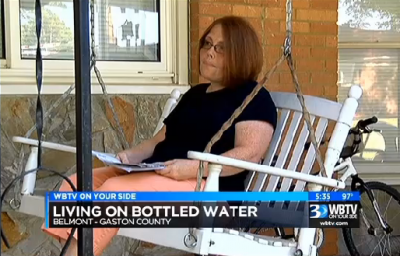
I met Archie Dixon, who was featured in the Gaston Gazette a few months ago. Dixon had complained to Duke Energy, which owns the power plant, about coal ash staining his property and getting into his drinking water. I spoke with him while he and his grandson (also named Archie, or “Lil’ Arch”) waited for a plumber for a broken pipe on their property. In his garage sat a waist-high stack of bottled water. Mr. Dixon said that he still refuses to drink his own home’s water.

The pollution near the plant happens in two ways. One is through coal ash ponds. Coal ash is the waste byproduct from burning coal and it contains contaminants such as arsenic, mercury and chromium. Because the one active coal ash pond at G.G. Allen is an unlined impoundment, these toxics can seep into groundwater. Tests near the plant have revealed exceedances in manganese, iron and nickel in the groundwater.

Effluent is the other form of pollution at G.G. Allen — the plant wastewater that discharges directly into the surface waters of nearby Lake Wylie. Under the Clean Water Act, permits are issued for each of the plant’s discharge points. These permits, however, only set limits for traditional pollutants, including oil and grease, “total suspended solids” and pH. They rarely limit pollutants such as mercury, selenium, and arsenic. And with a lack of federal guidelines, many states don’t set their own permit limits for these toxic chemicals.

Read more
...


North Carolina Cares About Clean Water


Thursday, March 7th, 2013 | Posted by


According to a recent report by Land for Tomorrow, 91 percent of residents in North Carolina and surrounding states believe it is “important” or “very important” to conserve and protect water and other natural resources. Additionally, a 2002 publication of the N.C. State Economist it was found that people are willing to pay more money in the form of travel expenses in order to enjoy higher levels of water quality. Based on an estimated 14.7 million water-related recreation trips each year by North Carolinians, annual economic savings from water improvements are estimated to be $11.9 million for the Neuse waterway, $14.7 million for Cape Fear improvements, and $6.5 for Tar-Pamlico. While protection of natural resources may sometimes be a divisive topic, residents of North Carolina share a common desire for clean water, with good reason. Clean water is good for the environment and the economy.

The benefits of clean water can also be understood by realizing the costs associated with water treatment. According to a report by the N.C. Division of Water Quality, costs to be considered include additional water treatment, developing new drinking water sources or providing emergency replacement water, public information campaigns when pollution incidents arouse public and media interest, and payment for consulting services and staff time. When Burlington, N.C., found contaminants in their source water that were not eliminated during treatment, city subsidies were used to eliminate it from source waters.

Perhaps a more important measurement of the economic benefits of clean water is the success of publicly funded solutions for addressing water pollution. The N.C. General Assembly established the North Carolina Clean Water Management Trust Fund in 1996 and its funding of resource conservation has strengthened the state’s economic vitality. According to a report by the Trust for Public Land, every dollar invested In the N.C. Clean Water Management Trust Fund returns four dollars to the state in the areas of drinking water protection, flood control, tourism and outdoor recreation.

Read more
...


Finding Arsenic in Mountain Island Lake: Even a Sixth Grader Can Do It


Wednesday, February 20th, 2013 | Posted by Matt Grimley


Just recently, sixth grader Anna Behnke found high levels of arsenic near her home on Mountain Island Lake, a drinking water source for hundreds of thousands in the Charlotte, N.C. metro area. The contamination — which exceeds EPA drinking water standards twenty-fold — comes from coal ash seepage at Duke Energy’s Riverbend power plant, which the utility announced it will decommission in April without a plan to deal with the coal ash ponds on site.

View full article here.

N.C. Rep. Pricey Harrison to Make Case for Federal Environmental Protections


Thursday, February 14th, 2013 | Posted by Brian Sewell


North Carolina Rep. Pricey Harrison will testify at a House subcommittee hearing on the states' role in environmental protection.

On Friday morning, North Carolina Rep. Pricey Harrison will testify before a House hearing on “the role of the states in protecting the environment under current law.” It’s an area she knows a lot about – in 2007, Harrison introduced a bill to prohibit utilities in North Carolina from purchasing or burning coal from mountaintop removal mines.

Subcommittee members will hear testimony on issues related to current laws including the Safe Drinking Water Act and Resource Conservation and Recovery Act under which states are given the primary authority to regulate wastewater and coal ash pollution.

Watch Rep. Pricey Harrison’s testimony and the hearing Friday at 9:30 a.m. here.

During tomorrow’s hearing, Harrison will likely focus on the concerns of North Carolinians surrounding coal ash and the state’s failure to adequately protect communities and local waterways. The problem of coal ash is growing in North Carolina, and even as Duke Energy begins to retire ancient coal-fired power plants, the state has no clear plan on how to deal with legacy ash disposal sites that will remain long after plants are closed.

Learn about the hazards and history of coal ash sites in North Carolina and across the Southeast.

Duke merged with Progress Energy last year to become the largest utility in the country. Meanwhile, the N.C. Department of Environment and Natural Resources is coming off a fresh round of budget cuts, and faces continued uncertainty if North Carolina lawmakers continue on their current path.

Adding insult to injury, nearly every step of the process to bring fracking to North Carolina has been haphazardly handled. Now, the state General Assembly has introduced a law to circumvent the rule-making commission it put in place, you know, if it isn’t moving fast enough.

North Carolina has a history of environmental leadership, but recent proposals in the state legislature, including a reckless plan to remove all the members of several environmental commissions, are threatening to reverse that trend.

Lawmakers are on an anti-regulatory bender in the Tarheel State. And without federal oversight North Carolinians will be at risk as underfunded state agencies work to enforce environmental rules while finding ways to prevent the next budget cut.

N.C. Environmental Commissions Under Attack by Senate Bill 10


Wednesday, February 6th, 2013 | Posted by Davis Wax


Update: In about 48 hours, with almost no chance for public input, the North Carolina state Senate passed a poorly designed bill to fire all current members from several N.C. advisory boards and commissions, including the Utilities Commission and Environmental Management Commission. Give your state Rep. a call today and ask that they oppose this legislative overstep and actually govern. [http://www.ncleg.net/representation/WhoRepresentsMe.aspx]

An unprecedented power grab is in the works in North Carolina, where Republican majority leaders are looking to cut and replace environmental and other key decision-makers on the party’s own terms.

State Sen. Bill Rabon introduced SB 10 aimed at removing environmental experts from state committees. Photo credit to ncleg.net.

The N.C. Senate Rules Committee met on Feb. 5 concerning Senate Bill 10, the “Government Reorganization and Efficiency Act,” legislation that seeks to remove 131 members of eight influential state boards and commissions before their terms are up. This action would see the effective gutting of environmental experts from the state’s decision-making process and the likely appointment of new, pro-industry members.

If there were ever a time to send a message to your North Carolina state senator, it would be now. Call them or email them today!

Among the committees being affected are the Coastal Resources Commission, the Environmental Management Commission, the Industrial Commission, and the Wildlife Resources Commission. Most importantly, the bill would allow the General Assembly and the governor to hand-pick replacements.

The number of environmentally-focused boards possibly being stripped of their membership could spell disaster for ongoing projects concerned with regulating pollution and protecting the environment. The new commission members would not have the level of expertise or the familiarity with the projects of current members, thus ensuring the degradation of the state’s progress toward proper environmental protection.

That’s not the whole story, though, as further steps are being taken to weaken the influence of environmentally-conscious voices in the legislature.

Read more
...


Coal Ash: Now a Part of a Balanced Breakfast


Thursday, January 31st, 2013 | Posted by Hallie Carde


This just in: in addition to fruits and veggies, our nation’s children should be getting their daily dose of coal ash. Or at least that’s what statements at a public hearing in Franklin County, Missouri, seem to suggest.

Just last week, there was a hearing for a lawsuit filed by the Labadie Environmental Organization over a zoning amendment that would allow Ameren Corp. to construct a new coal ash landfill in the heart of a floodplain. Toxicologist Dr. Lisa J.N. Bradley, testifying on behalf of Ameren Energy Corporation, said, “A child could consume coal ash every day and have no increased exposure to arsenic.”

Bradley was recently elected to the Executive Committee of the American Coal Ash Association, a lobbying organization whose membership includes Ameren, Duke Energy, Southern Company and other large coal-burning utilities. Unfortunately, it seems that conflict of interest was lost on Associate Circuit Court Judge Robert D. Schollmeyer, who dismissed the lawsuit citing Bradley’s testimony.

Maximiliano Calcano, age 2, is one of the first children born with a dramatic birth defect attributed to the coal ash dumping in the Dominican Republic.

There are many who have had to face the traumatic effects of toxic coal ash firsthand. Following the AES Corporation’s dumping of 80,000 tons of coal ash waste along the shores of the Dominican Republic between 2003 and 2004, the country’s women have suffered years of consistent miscarriages, abnormal levels of arsenic in their blood, and births to babies with cranial deformities, external organs, and missing limbs.

While we have yet to uncover such a horrific case here in the states, concerns over coal ash are real. Archie Dixon lives just south of Belmont, N.C., where Duke Energy’s coal ash ponds are some of his closest and most unwelcome neighbors. Distrustful of the visible grime and discoloration of his water, Mr. Dixon has been buying bottled water for years, unwilling to ingest the water from his home’s private well. Despite reassurance from Duke Energy officials who say that lab tests show that the sediment in Mr. Dixon’s water is of naturally occurring materials, he refuses to take any risks with his water. Dixon is not the only member of his community concerned about coal ash.

Read more
...


Ol’ Dan River (Despite Coal Ash) Just Keeps Rollin’


Monday, December 17th, 2012 | Posted by Matt Grimley


Appalachian Voices recently submitted their comments to the N.C. Department of Environment and Natural Resources on Dan River Steam Station’s new permit to discharge coal ash.

As we all know, coal ash isn’t a pretty thing. The harmful leftovers from burning coal contain toxic contaminants like chromium and arsenic, and seep into our waterways, threatening wildlife and human health all in one fell swoop.

Current testing at the Dan River Steam Station, according to the new website southeastcoalash.org, reveals levels of antimony, arsenic, iron, manganese, sulfate and total dissolved solids above state groundwater standards. That’s unacceptable — coal ash shouldn’t interfere at all with groundwater, surface water, or the waters we drink and play in. To keep coal ash at bay, the ponds of sludge located at Dan River and other sites should be properly lined and covered.

Read more
...


No Longer Hidden in Plain Sight, Thanks to SoutheastCoalAsh.org!


Monday, December 10th, 2012 | Posted by Sandra Diaz


For how large coal ash impoundments can be, they are sure hard to spot.

For example, there are two large earthen dams full of coal ash just north of Charlotte near Mountain Island Lake. Can you spot them?

(Answer: They’re on that long ridgetop to the left of the plant.)

Since Duke Energy is probably not going to place yellow neon signs near the impoundments to alert the public to the dangers that these dams may cause to groundwater or public safety anytime soon, we did the next best thing. Working with Southern Alliance for Clean Energy and other partner organizations like Southern Environmental Law Center and NC Conservation Network, we have helped create Southeastcoalash.org. With just five key strokes (your zip code) you can see where coal ash impoundments are hiding in plain sight near you.

Read more
...


Singin’ the Catawba River Blues After Commission’s Decision On Coal Ash


Thursday, December 6th, 2012 | Posted by Hallie Carde


North Carolina, we have a problem.

The waste from burning coal, known as coal ash, continues to threaten our state’s water supply. Seepage from coal ash impoundments is contaminating North Carolina’s water at various sites throughout the state. Unaddressed in the past and denied in the present, this pollution demands a stronger fight to protect clean water, and advocates are putting up that fight.

Unfortunately, advocates for N.C.’s clean water recently lost a battle on the coal ash front. This past Monday, the Environmental Management Commission (EMC) ruled against a petition to require Duke Energy to clean up contamination resulting from 14 of their coal ash pits.

Monday’s hearing ended in a 9-2 decision that the company’s coal ash sites are exempt from the requirements of the state’s groundwater standards and therefore do not require immediate clean up.

In October, the Southern Environmental Law Center filed a formal complaint on behalf of four organizations (Cape Fear River Watch, Sierra Club, Waterkeeper Alliance, and Western N.C. Alliance) against Progress and Duke Energies to clean up the contamination from their coal ash ponds.

Read more
...


Cape Fear: Starring Toxic Contaminants, Directed by Coal Ash


Sunday, October 28th, 2012 | Posted by Matt Grimley


When state regulators were shown groundwater test samples taken near the Cape Fear River in eastern North Carolina with elevated levels of arsenic, thallium and chloride, the contaminants that seeped in from Lake Sutton, a coal ash pond next to the Sutton coal plant….that means the regulators made the plant clean it all up, right?

It's as simple as she says: do we want coal ash (which makes Robert de Niro in Cape Fear look like an alright guy), or do we want clean water?

Well, they didn’t. That’s why last week, the Southern Environmental Law Center filed a formal complaint on behalf of four groups in North Carolina to push for more enforcement from the state Environmental Management Commission on the regulation of coal ash ponds. Kemp Burdette, the Riverkeeper with Cape Fear River Watch, said that state regulators are collecting samples that exceed NC groundwater standards, but are not forcing any of the coal plants to clean it up. “Over time, exposure to this stuff is going to make people really sick,” he said. “It’s going to have an impact on the human body.”

Coal ash, the toxic byproduct of burning coal for electricity, is typically stored in wet, often unlined ponds. These ponds then seep into neighboring groundwater. All across the nation, groundwater resources have been contaminated by coal ash. And as the Washington Post recently demonstrated, any protection of our nation’s waters from coal ash is being halted until after the election.

Read more
...


Go Tell It on Mountain Island Lake


Saturday, September 29th, 2012 | Posted by Matt Grimley


Last Sunday, the Charlotte Observer asked the question, “Are we doing enough on coal ash?” Two people stepped in to answer. The column in the negative was written by Sam Perkins, Director of Technical Programs for the Catawba Riverkeeper Foundation; the column in the affirmative was written by Mitch Griggs, vice president of environmental services for Duke Energy.

Perkins says that coal ash doesn’t get the hype it deserves. It leaches into our major rivers and lakes, poisons our fish and wildlife, and was the catalyst for one of the worst environmental disasters in our nations history. The fact is that coal ash is toxic: the heavy metals it contains are associated with cancer, birth defects, and other health problems.

“A person is entitled to do as they please on their property while respecting and not impacting property that is not their own,” says Perkins, raising a valid point: why are we allowing companies to pollute our waters? Clean water is our right, and why should current environmental regulations, which are inadequate and laden with exceptions for large utilities, allow utilities to plant coal ash ponds by public areas like Mountain Island Lake?

Aerial photo of the Riverbend coal ash ponds and their proximity to Mountain Island Lake

Fortunately, the people who live and love Mountain Island Lake, are stepping in, people like Sara Behnke. She heads up the organization We Love Mountain Island Lake, and is working to inform the public about the dangers of coal to our air, water and health. Specifically, she speaks up about the Riverbend Steam Station, its coal ash ponds, and their proximity to Mountain Island Lake, which happens to serve drinking water for Charlotte-Mecklenburg, Gastonia, and Mt. Holly. All in all, about 860,000 people get their drinking water from Mountain island Lake.

Read more
...


The Senate and the L’awful’ Coal Ash Bill


Thursday, September 20th, 2012 | Posted by


To put it mildly, the supposed coal ash regulation bill S. 3512 falls short of our expectations. The bill — proposed last July by Sens. Hoeven (R-SD), Conrad (D-SD), and Baucus (D-MT) — shields utilities from their obligations to upgrade their unsafe ash dumps in a timely fashion, clean up sites that they have contaminated, or close leaking and unstable ponds and landfills.

The aftermath of Kingston coal ash spill in 2008

Coal ash ponds are gigantic impoundments that contain the toxic byproducts from burning coal. S. 3512 won’t require deadlines for states to implement a permit program for coal ash ponds. The proposal even prevents the EPA from enforcing any standards contained in this bill, leaving the states free to do whatever they want.

To put it strongly and more correctly, S. 3512 isn’t OK at all. Tell the Senate today that clean water is your right.

Read more
...


A One-Two Punch in the Fight for Clean Water


Thursday, August 23rd, 2012 | Posted by Brian Sewell


It has been a week of good news in the fight for stronger protections against coal ash pollution. A court settlement in South Carolina and a major decision regarding the 2008 TVA Kingston coal ash spill make for a one-two punch against the poorly regulated toxic waste.

A federal court found that the Tennessee Valley Authority is ultimately liable for the December 2008 coal ash spill. The failed pond at TVA's Kingston Plant released more than one billion gallons of toxic coal ash and covered 300 acres.

This morning, a federal court ruled that the Tennessee Valley Authority is liable for the massive coal ash spill at its Kingston Plant in December 2008. In his written opinion, U.S. District Judge Thomas Varlan ruled that the spill resulted ultimately from TVA’s “negligent nondiscretionary conduct” — far from the unpredictable geologic event that TVA lawyers claimed was the cause during the trial.

In fact, we know more than ever just how preventable the catastrophic spill was. In the months following the event, an engineering firm hired by TVA issued a report that identified the unstable layer of soil beneath the coal ash which had gone undetected for decades as TVA continued to pile on larger amounts of the toxic waste. Subsequent reports revealed internal agency memos that contained warnings that could have prevented the spill. And in his ruling, Varlan was sure to mention that had TVA investigated and addressed the unstable pond, the spill might have been avoided.

Shorty after the coal ash pond failed, it became clear that the Kingston spill would become the worst environmental disaster of its kind in American history. TVA initially estimated that 1.7 million cubic yards burst from the pond and into the Emory and Clinch Rivers. They later had to revise that estimate to more than 5.4 million cubic yards — more than a billion gallons and 100 times larger than the 1989 Exxon Valdez oil spill.

Read more
...


Half-Baked Coal Ash Bill: A Dangerous Proposition for Our Air and Water


Friday, August 3rd, 2012 | Posted by Sandra Diaz


Air and Water Protections are as American As Apple Pie — and they are under attack.

Most people talk about creating legislation in terms of sausage-making. It can be downright dirty work. But I prefer to think of it as pie-baking, requiring the combination of concentrated efforts while keeping the final product in mind.

Though I am new to the world of baking, I have quickly learned one thing: no matter how great your filling, it is ultimately the crust that makes — or breaks — your pie. The filling is the easy part; just throw some fruit, flour, spices and sugar together – and voila! Pie crusts are very tricky though. If you get a temperature or an ingredient wrong, it doesn’t matter what’s in the pie — the integrity of your pie is toast.

Thanks to lillibakescakes.wordpress.com

A Bad Pie is like a Bad Bill... But with dire consequences

What does this have do with latest version of the Senate coal ash bill, introduced and sponsored by a number of Southeast Senators like Lamar Alexander (Tenn.), Jim Webb and Mark Warner (both from Va.), Mitch McConnell (Ky.), Joe Manchin (W.Va.) and Lindsey Graham (S.C.).?

The bill is being touted as a compromise of legislation that passed in the House and was first introduced in the Senate last fall. But while minimal improvements have been made to the filling of this legislation, its still a terrible pie overall.

Read more
...


Sustainability: What it Means and How to Achieve it.


Friday, July 13th, 2012 | Posted by Erin Burks


On Monday I had the opportunity to hear Chief Scientist of the Rocky Mountain Institute Amory Lovins speak at the campus of Appalachian State University. The lecture took place in the midst of the Appalachian Energy Summit, presented by Sustain Appalachia. If you missed the speech in person, you can check out the TED talk version of it.

“Sustain Appalachia,” I cannot think of a better name for the university’s mission.

Our organization, working with citizens nationwide, strives to sustain Appalachia everyday. Our goals include working to end the destruction of our land from mountaintop removal mining and protecting our air and water from the burning of coal and the resulting waste it produces. We are working to clear the way for a cleaner and more sustainable energy future.

What does sustainability mean to you?

Perhaps it means protecting the health of people and the environment today. Maybe it means ensuring that businesses can continue generating products and customers into the future, or maybe it means transitioning to an energy source that won’t run out. Sustainability is all of these things and more.

Read more
...


Facebook Twitter FlickR YouTube
Front Porch Bloggers Tags
Show/Hide list (-)

15th Anniversary 112th Congress 113th Congress A & G A & G Coal Corporation Acid Mine Drainage Across Appalachia Agriculture Air Pollution air quality Alabama ALEC Alexadra Cousteau Alliance for Appalachia Alpha Natural Resources American Chestnut american dream appalachia Appalachian Appalachian Culture Appalachian history Appalachian Identity Appalachian Legislators Appalachian politics Appalachian Regional Commission Appalachian State University Appalachian Streams Appalachian Transition Appalachian Treasures Appalachian Voices Appalachian Voices board of directors Appalachian Water Watch Appalachia Restoration Act Appalachia Water Watch Appalshop arch coal Arsenic Art Asheville Athens County Avian wildlife Bank of America bark Batson Creek Battle of Blair Mountain Bearwallow Mountain Beyond Coal campaign biodiversity black bears blair mountain blood mountain Blue Ridge Commons: Environmental Activism and Forest History in North Carolina Blue Ridge Escarpment Book Club Boone buffalo creek cancer carbon capture Carolina Mountain Land Conservancy Center for Appalachian Studies Central Appalachia Charlottesville Chattanooga Chimney Rock State Park China citizens united Clean Air Clean Air Act clean energy Clean Water Clean Water Act Clean Water Act 40th Anniversary Clean Water Protection Act Climate Climate Change climate change denial Coal Coal Ash coal ash health effects coal ash ponds coal decline coal electricity coal employment Coal generation Coal mining coal plants coal production Coal Report Coal Waste conductivity Congress Connestee Falls constellation Creation Care Cross-State Air Pollution Rule Cumberland Plateau Cypress creek d.c. Daniel Martin Moore David Brewer David McKinley Democracy dnc Documentaries Don Blankenship Downstream Strategies duke Duke Energy DuPont State Recreation Forest Earth Day EarthJustice Earth Ministry Eastern Band of Cherokee Economic Transition Economy editorial Education efficiency electricity Electric Utilities Elk Knob State Park Emory River Endangered species end mountaintop removal energy Energy Efficiency Energy Information Administration Energy Saving Energy Savings Environment environmental education Environmental Justice environmental literacy Environmental Protection Agency EPA Expedition Blue Planet extinction FArCES of Coal FERC Fish Kill Florence Nature Preserve fly ash Folktales Fontana Lake Foothills Trail forest Forestry Fox Squirrels fracking Frasure Creek Frasure Creek Mining and International Coal Group friends of smokies Gallatin game species gas gas emissions Georgia Georgia Power ghost stories globalization Golden-winged warbler Google Earth Gov. Steve Beshear grandfather mountain Great Smoky Mountains National Park green green-collar green building green economy green energy future GreenFaith and the Evangelical Environmental Network Greenhouse Gases Greenpeace Green River Preserve Hal Rogers Hampton Roads Hampton Roads Coal Plant HB 710 headquarters Health Heifer USA Hickory Nut Gorge Hidden Treasures High Falls hiking Hiking the Highlands hiking trails home improvement and remodeling Hooker Falls houses Hunting hydraulic fracking hydroelectricity ICG iLoveMountains Inside Appalachian Voices Interfaith Power & Light Interior Department Ison Rock Ridge Jay Rockefeller Jeff Goodell Jeff Goodell Jr. Jim Justice Jim Rogers jobs Joe Manchin Joseph Pizarchik Jr. Kathryn Newfont Kathy Mattea Kens Rock Kentuckians for the Commonwealth Kentucky Kentucky Energy and Environment Cabinet Kentucky Litigation Kentucky Riverkeeper Kudzu kudzu bug land Land Conservation Land management land protection LEAF lobbying local farming Marcellus Shale Massey Energy Matt Wasson membership spotlight Mercury Mercury and Air Toxics Standard mercury and air toxic standards Michael Johnathon mine Mine Safety and Health Administration Mining Jobs Molly McGinn mountains Mountaintop Removal Mountaintop removal permits MSHA Mussels N.C. Politics Nally & Hamilton Nantahala National Forest National Mining Association National Resources Defense Council Natural Gas Naturalist's Notebook nature New River Nick Rahall North Carolina NRDC nuclear ODEC Office of Surface Mining offshore wind Ohio Operation Medicine Cabinet opportunities Outdoor Recreation Patriot Coal Pennsylvania Photography Pine Mountain Park Pisgah Forest Politics pollution Possum Jenkins Powder River Basin Prescribed burns President Obama progress Progress Energy Property Rights public lands re-zoning recycling recycling building materials Red Red White and Water Religion in the Environment Renewable Energy Renewable Portfolio Standards Rick Boucher Riverkeeper Rivers Robert F. Kennedy Same Sun Here scenic vistas Scenic Vistas Protection Act Science and Nature science education SELC Selenium selenium pollution Senate settlement sewanee coal seam shale gas Sharyn McCrumb Shelley Moore Capito Sierra Club Silver Slip sludge sludge safety project Solar Solar Energy Solar Homestead Project South Carolina South Cumberland Plateau Southern Appalachian Mountains Southern Appalachian Mountain Stewards Southern Environmental Law Center SouthWings spirituality Sportsman’s Heritage Act spruce pine state environmental policy Stone Mountain stop mountaintop removal Stream Buffer Zone Stream Protection Rule summer camps Sundance Power Systems surface mining Surface Mining Control and Reclamation Act Surry Surry Coal Plant sustainability sustainable agriculture sustainable alternatives sustainable building sustainable farming tax credits and incentives Tennes Tennessee Tennessee Scenic Vistas Protection Act Tennessee State legislature The American Chestnut Foundation The American Legislative Exchange Council The Appalachian Voice the human cost The Voice This Green House Tom Cormons Tom Hansell Tom Kilgore TRAIN Act Transylvania County treasures Triple Falls TVA TVA Kingston coal ash spill U.S. Department of Energy U.S. Representatives from North Carolina U.S. Representatives from Tennessee U.S. Representatives from Virginia U.S. Representatives from West Virginia UMWA Uncle Falls United Mine Workers of America United Mountain Defense united states Upper Watuaga Riverkeeper uranium mining US Forest Service Viewpoint Virginia Virginia General Assembly Virginia ODEC virginia state parks Virginia Tech Wales War on Coal washington Washington DC Watauga Water Waterkeeper Waterkeeper Alliance Water Pollution Water quality weatherization Weed Patch Mountain Week in Washington West Virginia White Squirrel Hiking Challenge Wilderness Society Wildlife Williamson wind energy Wind Power wind turbine Wise County Wise Energy for Virginia Wise Energy for Virginia Coalition wvdep Youngs Mountain

Tags