I’m glad to live in a country where crazy stuff happens, but we are at least are able to stand up, criticize and even fire those in charge
Welcome to Tennessee Tuesday! We’ve got our grills, our flags, and our green tomatoes just waitin to be fried. We’ll be fairly succinct this week as we look to pack 5 days of work into an abbreviated work-week and planning for a trip back to our nation’s capitol next week to talk about some exciting energy efficiency developments happening in Congress.
TDEC brought on themselves another round of embarrassment after the (now former) Deputy Director of Water Resources called citizen water complaints “terroristic.” [audio]
Yes, yes, it’s a strange time in America when protecting Appalachia from being blown apart is a threat to national security and we have to poison our own water in secret to stop the terrorists.
Wow. 
A state environmental official suggested at a public meeting that Mt. Pleasant residents who have filed formal complaints about city water quality are committing “an act of terrorism” if their concerns have no basis.
Sherwin Smith, deputy director of the Tennessee Department of Environment’s Division of Water Resources, made the comment and repeated it during a May 29 meeting between TDEC officials, State Rep. Sheila Butt and members of the grassroots activism group Statewide Organizing for Community Empowerment (SOCM).
Rep Sheila Butt and I have spoken on several occasions, and while we don’t agree on everything, I’ve found her to always have an open ear, and to be an avid enthusiast for the democratic process – at the very least. She was not impressed by Mr. Smith’s words.
However, Rep. Butt — whose district includes Mt. Pleasant — was present at the meeting for any clarification Smith may have provided and said his comments were out of place.
“I just have to say that meeting was set up with some citizens of Mt. Pleasant and we were simply talking about water quality and rates of service there, and that comment was really out of context for the meeting that we were having,” Butt said Thursday. “That was my take then and that’s my take now.
“I’m sure he’s sorry he even brought it up,” she continued. “Nobody was talking about terrorism in that meeting.”
It seems that these “terrorists” may have won, as the City of Mt. Pleasant was forced to test their water to make sure that it wasn’t poisonous. Encouraging!… (more…)
Read More ...





 Last week, the United States Senate came down with a strange case of self-loathing and took the rare — some would say extreme — step of actually doing something. Old political professionals, say that this is called “action.” Appalachian Voices members will be most enthused to learn that one of the actions taken by the Senate was to approve longtime clean air advocate Gina McCarthy as the head of the U.S. Environmental Protection Agency.
  Unfortunately, it seems that the House representatives, ever-quicker to exercise their dysfunction, have caught the do-something-itis, and in doing so have proposed
 Let’s drive straight over to President Obama’s supposedly historic speech on his administration’s plans to address climate change. You can watch the full speech on whitehouse.gov, see the nifty infographic they put together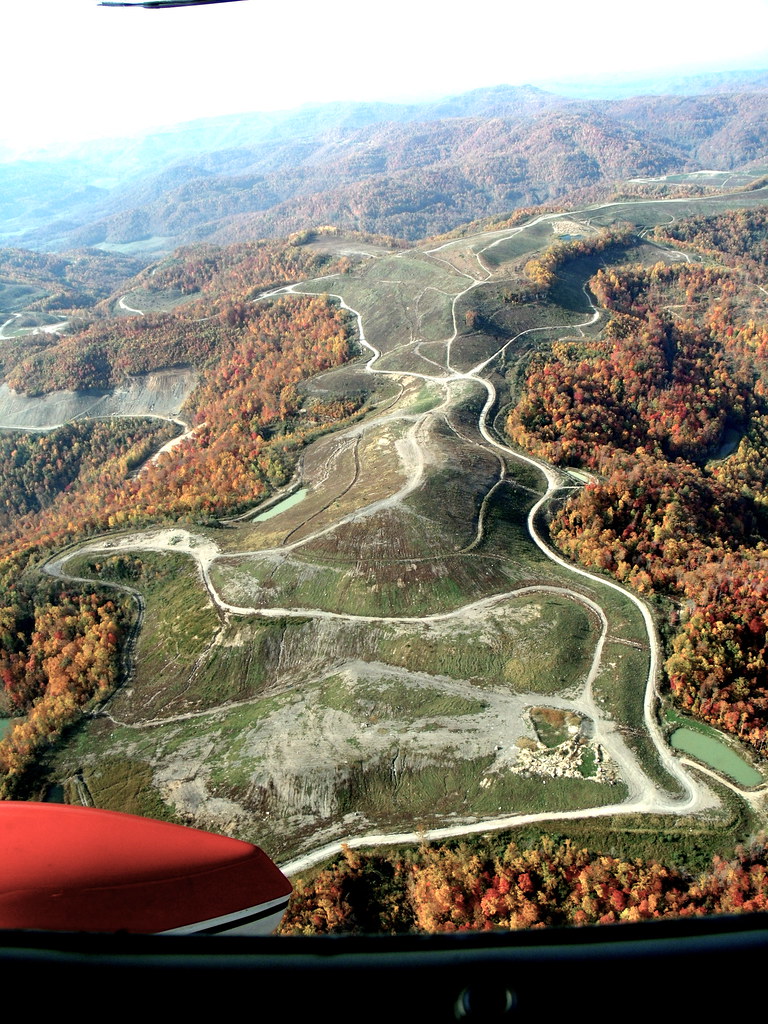
 We know that the Scenic Vistas Protection Act has an exemption for the “wonderful” re-mining that the coal industry is so proud of themselves for “doing.” But that wasn’t mentioned either.