Get Our RSS Feed!
Front Porch Blog


“I’m Here Because I Love Mountains:” Watch a speech by Appalachian Voices’ JW Randolph


Tuesday, February 12th, 2013 | Posted by


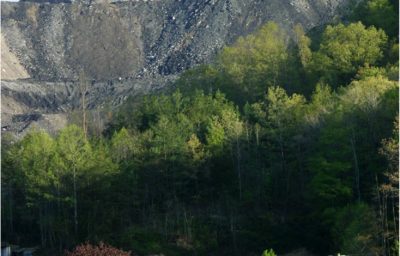
On Feb. 8, Appalachian Voices Tennessee Director, JW Randolph, spoke to members of the state legislature, the media and the environmental community. Below is a video and the transcript of his speech in support of the Tennessee Scenic Vistas Protection Act, a bill to protect the state’s virgin ridgelines from mountaintop removal coal mining.

Hello, my name is JW Randolph, and I’m proud to serve as the Tennessee Director for Appalachian Voices. I’m here to speak with you for a few minutes about efforts to protect Tennessee’s mountains, but first I want to thank the members that have joined us here this morning. Chairman Southerland and Representative Gilmore have both supported the Scenic Vistas Protection Act, and we’re happy you’re here. We’re thankful to you both and look forward to continuing to work with you to pass this important legislation. I would also like to thank those in attendance for engaging in the democratic process, and finally I’d like to thank the Tennessee Environmental Council, Gretchen Hagle, John McFadden and your team. You guys are great leaders in this movement here in Tennessee and for us here on Capitol Hill, we all appreciate you and the work you do.

I’m here because I love mountains. I grew up in a log cabin my father built in the woods, on the banks of the Tennessee River. And like many of you, I got to know my family, my place, and our history through walking the beautiful woods and waters of middle Tennessee, fishing, hiking, and 4-wheeling. The time spent in these mountains taught me about freedom, responsibility and self-reliance. This was where I learned the best of home, the best of our state, and the best of what our country has to offer. As I got older, I learned that not too far away, near our ancestral land, coal companies were blasting apart the mountains, and poisoning the streams that we ran through.

My daughter will turn two years old this month. When I was her age, there were 500 mountains across Appalachia that are no longer there. Since then there have been 2000 miles of streams buried by mining waste, and 125-square miles of The Cumberland Plateau that has been altered irrevocably. That is why its important that Tennesseans join the effort to pass the Tennessee Scenic Vistas Protection Act.

Read more
...


Kentucky Attempts to loosen Selenium Standards, Fish Attempt to Leave the State


Friday, February 8th, 2013 | Posted by Eric Chance


Fish deformed by selenium pollution

The Kentucky Energy and Environment Cabinet is in the process of making the state’s water quality standard for selenium less stringent. Selenium is a metal that is especially toxic to fish, and is often released into streams through coal mining.

There will be a hearing before the Administrative Regulation Review Committee on Monday February 11, at 1 p.m. in Room 149 of the Capitol Annex, where, according to the Energy and Environment Cabinet website, the public “may” be able to speak out about this, but we still encourage concerned citizens to attend.

Selenium is a toxic nonmetal that is present in some coal and coal ash. Some of Kentucky’s mines release a lot of selenium because they are mining high-selenium coal seams, while others don’t release any.

Selenium is extremely toxic to fish in very low amounts because of its tendency to bioaccumulate. Selenium builds up in small fish and macro-invertebrates, and it accumulates even more in the fish that eat them. Toxic effects of selenium in fish include reproductive problems, deformities, damage to gills and organs, and death. The most obvious deformities are strangely curved spines, and “pop eye” — a buildup of fluid behind the eyes, causing them to bulge out.

Read more
...


Turning a Win-Win into a Lose-Lose: Virginia Senate Kills Renewable Energy Bill


Wednesday, February 6th, 2013 | Posted by Nathan Jenkins


Rather than fixing a problem, Virginia lawmakers prolonged it when they killed legislation to reform the state's renewable energy portfolio standard.

Last fall, Virginia Attorney General Ken Cuccinelli latched on to the idea that Dominion Virginia Power and Appalachian Power did not deserve huge bonuses for buying cheap renewable energy credits without actually building wind and solar projects in Virginia, and released an unsolicited report on the issue.

Appalachian Voices and our partners in the Wise Energy for Virginia Coalition have long advocated that the bonuses were failing to develop the renewable energy industry in the state and that a legislative fix is in order. The Senate Commerce & Labor Committee reached the same conclusion and tasked Cuccinelli and the utilities to work out an agreement, which they did.

The problem is that Cuccinelli, while claiming to resolve concerns from the environmental community, failed to invite us to the table. The result was a bill that simply dropped the bonuses, but did not replace those incentives with a mandate to build renewable energy in Virginia or even a preference for better quality credits.

The Wise Energy coalition worked with Senator Donald McEachin and Delegate Alfonso Lopez on legislation that requires credits purchased by utilities to be from the newest and cleanest sources of renewable energy. The proposal was carefully crafted with the singular goal of picking up where the attorney general’s bill left off, but it actually solves the problem of misplaced incentives and the lack of investment in Virginia wind and solar power.

It was a reasonable measure. However, despite strong supporting testimony from our unlikely ally — even Dominion said it was the “best solution” for solving the credits problem — it failed in a House Commerce and Labor subcommittee last week. The Republican chairman, Delegate Terry Kilgore, and his colleagues refused to address the problem.

Read more
...


Appalachain Voices and Partners Object to Backroom Deal With Kentucky Coal Company


Monday, February 4th, 2013 | Posted by Eric Chance


Frasure Creek owner, and billionaire, Ravi Ruia's yacht. Note the matching helicopter! Frasure Creek Mining is apparently on the verge of bankruptcy, but it's owners seem to be doing just fine. Click the image to learn more about the boat.

A coalition of citizens’ groups including Appalachian Voices filed objections to a proposed settlement between Kentucky’s Energy and Environment Cabinet and one of the state’s largest coal mining companies, Frasure Creek Mining. The agreement would legally resolve over a thousand water pollution violations from 2011 and 2012 at all of Frasure Creek’s mines across Eastern Kentucky, but the agreement will not fix the pollution problems.

Despite the fact that we are full parties to this enforcement action, this agreement was crafted entirely behind closed doors without us. Over and over again the cabinet has made every effort to exclude us and aid polluters. One of our objections to this settlement is that it has violated our right to due process since our names are on this agreement yet we had no say in it whatsoever.

Some of Frasure Creek's false conductivity values

Even more alarming, we expect that if this agreement is entered the cabinet will likely try to argue that this makes another ongoing case that we are involved in moot. That case is primarily based on blatantly false water monitoring reports submitted by Frasure Creek. Prior to that legal action, Frasure never admitted having pollution problems like the ones at issue in this case. It was not until they came under increased scrutiny, following our initial court filing, that they began reporting more truthful water monitoring data, uncovering the pollution violations at issue in this settlement.

Read more
...


WATCH: Appalachian Kids Give Science Lesson to President Obama


Thursday, January 3rd, 2013 | Posted by Matt Wasson


Children in Appalachian coal mining communities are 42% more likely to be born with birth defects and have a life expectancy that is almost 5 years lower than the national average. As this short video shows, they understand why:

Dozens of scientific studies have linked mountaintop removal coal mining to high rates of cancer and other diseases in nearby communities. But as these children explain, you don’t need to be a scientist to understand the devastating impact that mountaintop removal has on the health and quality of life of people living nearby.

Thanks to thousands of people who have spoken up for Appalachian mountains and communities time and again, President Obama’s agencies have taken major steps to reduce the destruction caused by mountaintop removal coal mining over the past four years.

As the president is sworn in to a second term later this month, we have an opportunity to finish the job and stop mountaintop removal once and for all. But we need to ensure that President Obama makes this a priority in his second term.

That’s where you come in. Please join these kids in sending a clear message to the White House: No more excuses, Mr. President. End mountaintop removal. Now.

Help these children spread the word about what’s happening in their communities by sharing this video with your friends, family and colleagues.

A Physician’s Take on Coal Pollution


Tuesday, December 4th, 2012 | Posted by Brian Sewell


"I look at the attacks on EPA as a war on health … The Environmental Protection Agency is working mightily and against increasing odds to really make important public health decisions that are protective of human health and benefit everyone." - Dr. Alan Lockwood in an interview with Earthjustice.

A few weeks after releasing our report, The Human Cost of Mountaintop Removal Coal Mining, and helping launch the No More Excuses campaign through iLoveMountains.org, I was turned on to a interview about the impacts to human health during various stages of the coal use cycle.

On Earthjustice’s Down to Earth podcast, Jessica Knoblauch spoke with Dr. Alan Lockwood, the co-chair of the Physicians for Social Responsibility’s Environment and Health Committee and the author of the new book, The Silent Epidemic: Coal and the Hidden Threat to Health.

For its short length, the interview does a great job of touching on coal’s impacts, the importance of regulations that protect human health, and why Lockwood feels it is his responsibility as a physician to educate others in the medical community, legislators and the general public about the true cost of coal. Listen to the full interview below, or read the transcript here.

Read more
...


Electoral Math for “All You Climate People”


Tuesday, November 20th, 2012 | Posted by Matt Wasson


During a campaign season in which climate change featured most prominently as a laugh line at the Republican National Convention, the low point was when CNN’s Candy Crowley addressed “all you climate people” in her explanation of why climate didn’t come up during the presidential debates. Who knew that human disruption of the global climate had become such a narrow, provincial concern?

But there’s important information in the fact that a senior reporter for a major network could dismiss climate change as essentially a special interest issue. It’s evidence, if more were needed, that “all us climate people” got our butts kicked in the battle for the narrative in the 2012 election.

And like the Republican Party, which is now undergoing the usual soul searching that follows a big electoral defeat, those of us who believe that inaction on climate is the greatest threat facing our civilization (never mind the economy) have some serious soul searching to do about our own defeat, which occurred long before any votes were counted.

Crowley’s explanation was consistent with the conventional wisdom on why the president didn’t make climate an issue. Because it was an “Economy election” and everyone in the DC press must accept that government action on climate change could do serious harm to the economy (because “it’s become part of the culture,” even if it’s not true), any discussion of climate policy by the president would have been off-message and worked against his chances for re-election.

The unconventional wisdom, popular among “climate people,” is that the Obama campaign failed to recognize the high level of popular support for action on climate change and missed a golden opportunity to seize a winning wedge issue when they chose the more politically expedient route of ignoring it.

There’s probably some truth to both of these explanations, but here’s a third one that is particularly useful in the context of a presidential election: the campaigns avoided talking about climate policy because they believed that raising the issue would be harmful in a few swingy areas of key swing states that would likely decide the election.

Look, it’s tempting to point to all the national polls showing popular support for climate policy and say, “climate is a winning campaign issue.” But a political strategist would find nothing useful in those polls because campaigns are not won by appealing to the sentiments of the average American. Similarly, when a presidential candidate is speaking to a national audience, it’s easy to believe they are speaking to us — all of us. But they’re not. By and large, the candidates’ speeches are written to appeal to a handful of undecided voters in a few swing states, with just enough partisan red meat thrown in to motivate the party base to volunteer for the campaign and turn out to vote.

Americans understand that those swingy areas are the “tail that wags the dog” of our national elections but don’t necessarily think about the logical conclusion of that fact; the concerns and attitudes of swing voters in swing states are the “tail that wags the dog” of campaign messages, media coverage, and thus public understanding of what issues are important in the campaign.

The problem is fossil fuel interests have figured out how to wag that dog. They know they can’t win public opinion nationally, but by focusing resources in key areas of swing states such as Virginia, Ohio and Pennsylvania, they can frame the local discussion of climate policy and environmental regulations to their advantage (i.e., as a “Job-killing war on coal“) and essentially neutralize those issues at the national level — at least during the election season.

If the Obama campaign’s pre-election polling looked anything like the maps of election results in coal-mining regions of southwestern Virginia and southern Ohio, it’s easy to imagine strategists telling the president, “Don’t exacerbate this ‘war on coal’ thing or it could hurt us in swing states” (see map):

US_Election_Vote_Margins2

Read more
...


Sustaining Healthy Appalachian Communities


Friday, November 16th, 2012 | Posted by Brian Sewell


Editor’s Note: Wendy Johnston is a sixth generation West Virginian from Mercer County and the granddaughter and great granddaughter of coal miners. Her post is the second in a series of guest blogs coinciding with our “No More Excuses” campaign on iLoveMountains.org, where we ask impacted Appalachians why President Obama should make ending mountaintop removal a priority in his second term. We’re happy to feature her story here.

***

"Our plea is this: please quit pitting neighbor against neighbor in a fabricated war against a finite resource, support our sustainable business ventures, invest in the future of our children so that they can stay in healthy Appalachian communities."

“Oh the West Virginia hills how majestic and how grand, with their summits bathed in glory like our Prince Emmanuel’s land. Is it any wonder then that my heart with rapture fills, as I stand once more with loved ones on those West Virginia hills?”

That is a verse from the state song of West Virginia. As a child I can remember feeling so proud every time I sang this song. As a college student living away from my family this song made me feel closer to the hills that seemed so very far away, and as a young mother just moving home after a long absence I could not wait to teach my children the song that would be their state song. Little did I know that one day the words to this song may not be true, that our majestic mountain summits would someday be destroyed and that even our loved ones gone on before us would have their resting places disturbed.

Mountaintop removal has put in jeopardy more than just those mountain summits though. This form of mining has destroyed entire communities, poisoned water systems, polluted our air and caused one of the largest health emergencies in our nation’s history.

Read more
...


Moving Appalachia Forward!


Thursday, November 8th, 2012 | Posted by Brian Sewell


Editor’s Note: As part of the launch of the “No More Excuses” campaign on iLoveMountains.org, we asked people whose lives have been directly impacted by mountaintop removal coal mining to contribute their thoughts on why President Obama should make ending mountaintop removal a priority in his second term.

The first in the series is a reflection by Nick Mullins, who was born and raised in southwestern Virginia and, until recently, worked at an underground coal mine there. Nick is now studying at Berea College in eastern Kentucky and blogs on the web site he created, The Thoughtful Coal Miner.


What are the Appalachian Mountains? Are they simply huge mounds of dirt and rock covered by forests? Are they containers for vast resources of energy and wealth? To my family — who have called the Appalachian Mountains home for ten generations — the mountains are much, much more. The mountains are our life, our heritage and our happiness. They are our shelters, our providers of clean water. They are a place where community and being a neighbor is more than just living beside someone.

Unfortunately, there are also those who see our mountains only as a source of wealth, rather than as part of our homes and our culture. They see them as obstacles to profit, and the people of Appalachia as the labor resource to harvest it.

Every day more blasts are detonated and more miles of freshwater streams are destroyed by mountaintop removal mining operations in the mountains where I was raised. The clean water that families once depended upon is now and forever stained and polluted.

Read more
...


Showing Faith in Appalachia’s Future


Friday, November 2nd, 2012 | Posted by Nathan Jenkins


Last Saturday, the Office of Justice & Peace of the Catholic Diocese of Richmond and Hollins University in Roanoke, Va., hosted an “Eco-Evening” to discuss how environmental issues in Virginia influence poverty and human health.

I was invited to relate the devastation caused by mountaintop removal coal mining. Many attendees were seeing photos of the desecrated mountains and sludge ponds in their state and other parts of Appalachia for the first time. Groans filled the room when I said that over 25 percent of Wise County, Va. has already been leveled.

Proponents of mountaintop removal have long promised that the practice would bring economic development to the region. Instead, we’ve been left with flattening mountains, polluted air and water. Fewer than 11 percent of abandoned mountaintop removal mines sites have been developed, and many that have been are publicly funded projects such as jails and community colleges. Occasionally a Wal-Mart or strip mall take root on the rocky soil.

Read more
...


Kentucky Governor Under Suit for Pro-Coal Corruption


Friday, October 19th, 2012 | Posted by Eric Chance


Kentucky Governor Steve Beshear

Former Mine Permits director Ron Mills claims he was fired for failing to sign illegal coal mining permits.

Mills was a political appointee of Kentucky Governor Steve Beshear, whose official website states:

As governor, Beshear has helped restore public trust by creating a culture of integrity in state government that has included rooting out cronyism and implementing stronger ethics standards.

Click below to read the recent Lexington Herald Leader stories:
>>Trial delayed again in case that probes coal’s influence on Beshear
>>Beshear trying to settle lawsuit brought by former mine permits director

A Chance to Learn and Share at Weekend in Wise


Thursday, October 18th, 2012 | Posted by Nathan Jenkins


The annual Weekend in Wise County event, hosted by the Southern Appalachian Mountain Stewards, is more than an opportunity for people to witness mountaintop removal coal mining and what it leaves behind for the people of Appalachia. It is an opportunity to meet an amazing community trying to raise their families in an environment where the land and water are under attack from the very industry that claims to sustain them.

Coal is a fact of life in southwestern Virginia and it has been for more than a century. The problem now is that the industry is taking far more than they are giving back. The coal industry has found a cheaper way to mine coal: use giant machinery, employ fewer miners and leave behind more problems.

Members of the artists group, the Beehive Collective, presented their intricate portrait of "The True Cost of Coal"

The whole issue – the past, present, and future of coal – was presented in an intricate piece of art from the Beehive Collective. The artists collected people’s stories from all over Appalachia to capture this struggle. Weekend in Wise is just one of many events where the artists present the “True Cost of Coal” and tell the story behind the work.

Read more
...


Welcome to Virginia’s Energy Conference, with your host King Coal


Thursday, October 11th, 2012 | Posted by Nathan Jenkins


Last week, Appalachian Voices and members of the Wise Energy for Virginia Coalition attended the Virginia Governor Bob McDonnell’s Energy Conference. Looking at the agenda, we were prepared for what would surely be a biased conference. But we didn’t know it would be this bad.

At every stage of the conference, the coal companies and electric utilities that survive on dirty energy completely suppressed the arguments for investment in energy efficiency and renewable generation. The state’s largest utilities, Dominion Virginia Power and Appalachian Energy, along with mountaintop removal giant Alpha Natural Resources, were the conferences top sponsors. Those sponsorships influenced the agenda, just as they influence in the Virginia General Assembly.

Virginia's energy policy is so concerned with how to keep coal relevant, Gov. McDonnell might as well wear his sponsors on his sleeve.

Dominion spent more than $5.5 million during the last decade in exchange for a hand in writing the laws under which it is regulated. That investment has proven worthwhile considering that Dominion stands to take in a $76 million bonus for spending less than $8 million on “clean” energy from other states, while building no new wind or solar in Virginia. This is just one of examples of corporate influence on energy policy reported in a white paper written by Appalachian Voices, the Sierra Club, and the Chesapeake Climate Action Network.

Use of coal for electricity generation is declining in the Southeast, largely due to market forces. While there is a lot of natural gas coming out of some of our neighbor states, we do not have much in Virginia. What we do have is a vast potential for energy efficiency and renewable generation, yet this conference refused to acknowledge this or take the rapidly growing wind and solar industries seriously.

Read more
...


Big Coal Wins Latest Battle to Blast Historic Blair Mountain


Tuesday, October 9th, 2012 | Posted by Matt Wasson


Is nothing sacred to coal companies in Appalachia?

March on Blair Mountain

In a jaw-dropping display of contempt and disregard for the communities and landscapes where they mine coal, three coal companies back in 2009 challenged the listing of West Virginia’s Blair Mountain on the National Register of Historic Places. The companies, including mining behemoths Alpha Natural Resources and Arch Coal, opposed the listing of Blair Mountain as a historic site because it could interfere with their plans to conduct mountaintop removal mining operations on the Spruce Fork Ridge battlefield, site of the “largest organized armed uprising in American labor history,” and the most important historic landmark in Central Appalachia.

The 1921 Battle of Blair Mountain was the culmination of a three-year struggle to unionize the coal mines of southern West Virginia and ended only when federal troops intervened on behalf of anti-union coal companies. There are few sites as significant as Blair Mountain that commemorate the brave men and women who laid down their lives for a movement that has brought Americans everything from the weekend to child labor laws to the largest and most prosperous middle class the world has ever seen.

Read more
...


Landmark Settlement Proposed in Kentucky Water Pollution Case


Friday, October 5th, 2012 | Posted by Eric Chance


Appalachian Voices, along with a coalition of citizens’ groups, has reached a historic agreement with International Coal Group, Inc. (ICG), and the Kentucky Energy and Environment Cabinet over years of false reporting and water pollution violations in Eastern Kentucky and a failure by the state to enforce the Clean Water Act.

We are very glad to achieve this settlement which will help clean up pollution in streams throughout the coal-impacted region, and we are proud to have worked with our partners in this important case that has already yielded changes in the coal industry and state regulatory agencies. The agreement was filed today in Franklin County Circuit Court and needs to be approved by the judge before taking effect.

Read our press release to find out more about the settlement.

In 2010, we uncovered dozens of pollution monitoring reports submitted by ICG and Frasure Creek Mining to the cabinet that were clearly false. Our analysis showed that some reports included all the same data as previous reports, but the dates had been changed. In other cases, there were multiple and contradictory reports for the same discharge point. Not only were the reports inaccurate, they were masking major pollution problems, as can be seen in the graphs below.

ICG Knott Conductivity

Read more
...


Revealing the True Cost of Coal by Taking the “Con” Out of Economics


Friday, September 28th, 2012 | Posted by Brian Sewell


When it comes to revealing external costs, the true cost of coal on the environment and our health must come first.

At the Democratic National Convention, Appalachian Voices’ staff attended and participated in several panel discussions and events relevant to our work. Perhaps the most engaging forum that I was fortunate enough to attend was the “Summit for a Sustainable Economy,” hosted by the American Sustainable Business Council.

Shortly after I arrived, flipped through the materials and familiarized myself with the panelists, I began to hear things from the front of the room that piqued my curiosity, things like “Not everything with a price has value, not everything with value has a price.” It didn’t take long to realize that these were folks who understand not only the moral reasons why people must come before profit, but that it’s also just good business.

Lew Daly, director of the Sustainable Progress Initiative and a senior fellow at Demos, did not speak this priceless phrase as a spontaneous thought, but as if it were a chief operating principle that should be accepted by businesses of all sizes, publicly and privately owned.

During the transition from a manufacturing-based to service-based economy, analysts began calling it a shift to the new economy. But that period of high growth soon stalled, and eventually the bubble burst. We’ve become disillusioned with the new economy and now thousands of businesses and groups like the ASBC are revealing the true economy. They know that calculating the true cost of coal — carbon pollution, environmental degradation and its many other external costs — imposed on the local and global environment will be essential in achieving this goal.

Read more
...


Susan Lapis, Volunteer Southwings Pilot, Given Prestigious Aviation Award


Thursday, September 27th, 2012 | Posted by Kate Rooth


Image courtesy of Southwings

Earlier this month, Volunteer Pilot Susan Lapis was awarded the 2012 “Distinguished Volunteer Pilot” award from the National Aeronautic Association and the Air Care Alliance as part of their Public Benefit Flying Awards Program.

For over a decade, Susan has been giving flyovers of mountaintop removal coal mining sites through her work with Southwings where she has been a volunteer pilot since 1999.

Susan and Southwings have made an incredible contribution to the fight to end mountaintop removal coal mining by giving individuals the unique ability to see the destruction of Appalachia from the air. Check out this video where Susan talks about the importance of these flights and why she has volunteered so much time to make them happen:

Video courtesy of the film Deep Down.

Read more
...


Update: House Passes Dirty Coal Package


Monday, September 24th, 2012 | Posted by Thom Kay


UPDATE: Last Friday, the House passed the Dirty Coal package, H.R. 3409, by a vote of 233-175. Thirteen Republicans, led by Rep. Mike Fitzpatrick (PA-8), crossed party lines to oppose the bill and stand up for Appalachian communities and public health. The three parts of the bill not related to mountaintop removal mining had received little Republican opposition, but the pro-mountaintop removal language caused over a dozen Republicans to oppose.

Disappointingly, Ben Chandler (KY-6) and Larry Kissell (NC-8), both cosponsors of the Clean Water Protection Act, voted FOR the bills, as well as bad amendments.

The “Stop the War on Coal Act of 2012” is not expected to be taken up in the Senate, and the President has threatened to veto the legislation.
————————————————————————————————————————-
This Friday, the U.S. House of Representatives will vote on a package of bills they are calling the “Stop the War on Coal Act of 2012,” and so far they’ve managed to keep a straight face. The package is comprised of five bills, four of which have already been passed at least once by the House, including the Dirty Water Act, the coal ash bill (again), and a bill to stop EPA from regulating carbon emissions. Instead of bringing the fifth bill up for a vote by itself, House Majority leadership has, for no legitimate legislative reason, decided to lump it in with four others that give coal companies the right to ignore both the Clean Water Act and the Clean Air Act.Bill Johnson Likes Coal

The fifth bill is Rep. Bill Johnson’s (OH-6) H.R. 3409, the “Coal Miner Employment and Domestic Energy Infrastructure Protection Act,” which may seem a bit wordy but has the catchy acronym “CMEDEIPA.” The bill is all about protecting the coal industry’s ability to continue mountaintop removal mining in Appalachia, although it would also derail efforts to protect streams from underground longwall mines.

Read more
...


Coming Soon: 5th Annual Weekend in Wise


Friday, September 21st, 2012 | Posted by Molly Moore


The 5th Annual Weekend in Wise County, hosted by the Southern Appalachian Mountain Stewards and the Wise Energy for Virginia Coalition amid Virginia’s treasured Appalachian Mountains, is just around the corner.

October 12 through 14, experience the beauty and culture of southwest Virginia and learn about mountaintop removal coal mining. Participate in tours of mountaintop removal sites, sustainable living workshops, community and expert panels, activist trainings. Also, enjoy local food, live music and dancing!

RSVP: Click here to register today!

The weekend will also feature information on a new campaign to stop an egregious project called the Coalfields Expressway, a 50-mile-long strip mine masquerading as a highway in southwest Virginia.

Not sure if you can make it? Weekend in Wise is worth the journey.

Last September, two whirlwind weeks into the beginning of my service year with Appalachian Voices, the Boone staff told my fellow newbie and I to drive the twisty roads north towards the sleepy-seeming town of Appalachia, Virginia. When we reached the Weekend in Wise headquarters at Appalachia Civic Center, we found a committed community determined to grow awareness of mountaintop removal, strengthen the movement, and have a good time while doing so.

Read more
...


‘Stand with Appalachia’ Solidarity Day


Monday, September 17th, 2012 | Posted by Cora Kessler


Last Thursday, Appalachian Voices, our allies and hundreds of anti-mountaintop removal activists gathered outside the White House to share personal stories of mountaintop removal, express hope for future change, and submit a photo petition signed by 13,500 people calling for an end to mountaintop removal mining once and for all.

Many protesters were brought to tears by the inspiring speeches given by Teri Blanton, Chuck Nelson and Junior Walk, to name a few. Most moving of all was the constant reminder of the late Larry Gibson’s contribution to this fight. This rally was dedicated to him.

Read more
...


Facebook Twitter FlickR YouTube
Front Porch Bloggers Tags
Show/Hide list (-)

15th Anniversary 112th Congress 113th Congress A & G A & G Coal Corporation Acid Mine Drainage Across Appalachia Agriculture Air Pollution air quality Alabama ALEC Alexadra Cousteau Alliance for Appalachia Alpha Natural Resources American Chestnut american dream appalachia Appalachian Appalachian Culture Appalachian history Appalachian Identity Appalachian Legislators Appalachian politics Appalachian Regional Commission Appalachian State University Appalachian Streams Appalachian Transition Appalachian Treasures Appalachian Voices Appalachian Voices board of directors Appalachian Water Watch Appalachia Restoration Act Appalachia Water Watch Appalshop arch coal Arsenic Art Asheville Athens County Avian wildlife Bank of America bark Batson Creek Battle of Blair Mountain Bearwallow Mountain Beyond Coal campaign biodiversity black bears blair mountain blood mountain Blue Ridge Commons: Environmental Activism and Forest History in North Carolina Blue Ridge Escarpment Book Club Boone buffalo creek cancer carbon capture Carolina Mountain Land Conservancy Center for Appalachian Studies Central Appalachia Charlottesville Chattanooga Chimney Rock State Park China citizens united Clean Air Clean Air Act clean energy Clean Water Clean Water Act Clean Water Act 40th Anniversary Clean Water Protection Act Climate Climate Change climate change denial Coal Coal Ash coal ash health effects coal ash ponds coal decline coal electricity coal employment Coal generation Coal mining coal plants coal production Coal Report Coal Waste conductivity Congress Connestee Falls constellation Creation Care Cross-State Air Pollution Rule Cumberland Plateau Cypress creek d.c. Daniel Martin Moore David Brewer David McKinley Democracy dnc Documentaries Don Blankenship Downstream Strategies duke Duke Energy DuPont State Recreation Forest Earth Day EarthJustice Earth Ministry Eastern Band of Cherokee Economic Transition Economy editorial Education efficiency electricity Electric Utilities Elk Knob State Park Emory River Endangered species end mountaintop removal energy Energy Efficiency Energy Information Administration Energy Saving Energy Savings Environment environmental education Environmental Justice environmental literacy Environmental Protection Agency EPA Expedition Blue Planet extinction FArCES of Coal FERC Fish Kill Florence Nature Preserve fly ash Folktales Fontana Lake Foothills Trail forest Forestry Fox Squirrels fracking Frasure Creek Frasure Creek Mining and International Coal Group friends of smokies Gallatin game species gas gas emissions Georgia Georgia Power ghost stories globalization Golden-winged warbler Google Earth Gov. Steve Beshear grandfather mountain Great Smoky Mountains National Park green green-collar green building green economy green energy future GreenFaith and the Evangelical Environmental Network Greenhouse Gases Greenpeace Green River Preserve Hal Rogers Hampton Roads Hampton Roads Coal Plant HB 710 headquarters Health Heifer USA Hickory Nut Gorge Hidden Treasures High Falls hiking Hiking the Highlands hiking trails home improvement and remodeling Hooker Falls houses Hunting hydraulic fracking hydroelectricity ICG iLoveMountains Inside Appalachian Voices Interfaith Power & Light Interior Department Ison Rock Ridge Jay Rockefeller Jeff Goodell Jeff Goodell Jr. Jim Justice Jim Rogers jobs Joe Manchin Joseph Pizarchik Jr. Kathryn Newfont Kathy Mattea Kens Rock Kentuckians for the Commonwealth Kentucky Kentucky Energy and Environment Cabinet Kentucky Litigation Kentucky Riverkeeper Kudzu kudzu bug land Land Conservation Land management land protection LEAF lobbying local farming Marcellus Shale Massey Energy Matt Wasson membership spotlight Mercury Mercury and Air Toxics Standard mercury and air toxic standards Michael Johnathon mine Mine Safety and Health Administration Mining Jobs Molly McGinn mountains Mountaintop Removal Mountaintop removal permits MSHA Mussels N.C. Politics Nally & Hamilton Nantahala National Forest National Mining Association National Resources Defense Council Natural Gas Naturalist's Notebook nature New River Nick Rahall North Carolina NRDC nuclear ODEC Office of Surface Mining offshore wind Ohio Operation Medicine Cabinet opportunities Outdoor Recreation Patriot Coal Pennsylvania Photography Pine Mountain Park Pisgah Forest Politics pollution Possum Jenkins Powder River Basin Prescribed burns President Obama progress Progress Energy Property Rights public lands re-zoning recycling recycling building materials Red Red White and Water Religion in the Environment Renewable Energy Renewable Portfolio Standards Rick Boucher Riverkeeper Rivers Robert F. Kennedy Same Sun Here scenic vistas Scenic Vistas Protection Act Science and Nature science education SELC Selenium selenium pollution Senate settlement sewanee coal seam shale gas Sharyn McCrumb Shelley Moore Capito Sierra Club Silver Slip sludge sludge safety project Solar Solar Energy Solar Homestead Project South Carolina South Cumberland Plateau Southern Appalachian Mountains Southern Appalachian Mountain Stewards Southern Environmental Law Center SouthWings spirituality Sportsman’s Heritage Act spruce pine state environmental policy Stone Mountain stop mountaintop removal Stream Buffer Zone Stream Protection Rule summer camps Sundance Power Systems surface mining Surface Mining Control and Reclamation Act Surry Surry Coal Plant sustainability sustainable agriculture sustainable alternatives sustainable building sustainable farming tax credits and incentives Tennes Tennessee Tennessee Scenic Vistas Protection Act Tennessee State legislature The American Chestnut Foundation The American Legislative Exchange Council The Appalachian Voice the human cost The Voice This Green House Tom Cormons Tom Hansell Tom Kilgore TRAIN Act Transylvania County treasures Triple Falls TVA TVA Kingston coal ash spill U.S. Department of Energy U.S. Representatives from North Carolina U.S. Representatives from Tennessee U.S. Representatives from Virginia U.S. Representatives from West Virginia UMWA Uncle Falls United Mine Workers of America United Mountain Defense united states Upper Watuaga Riverkeeper uranium mining US Forest Service Viewpoint Virginia Virginia General Assembly Virginia ODEC virginia state parks Virginia Tech Wales War on Coal washington Washington DC Watauga Water Waterkeeper Waterkeeper Alliance Water Pollution Water quality weatherization Weed Patch Mountain Week in Washington West Virginia White Squirrel Hiking Challenge Wilderness Society Wildlife Williamson wind energy Wind Power wind turbine Wise County Wise Energy for Virginia Wise Energy for Virginia Coalition wvdep Youngs Mountain

Tags